Sub-Zero Service — Meaning & Fix
On Sub-Zero units, Service means A general service alert — the control detected a fault that needs diagnosis. It is usually caused by sensor out of range. You can safely note any temperatures and whether the cabinet is still cooling, then book a diagnostic. Because a “Service” alert is generic; a technician reads the specific sub-code in service mode to pinpoint the part., you generally need a technician to confirm the exact part. Code text and behavior vary by model and generation, so verify against your service guide or call (650) 484-4687.
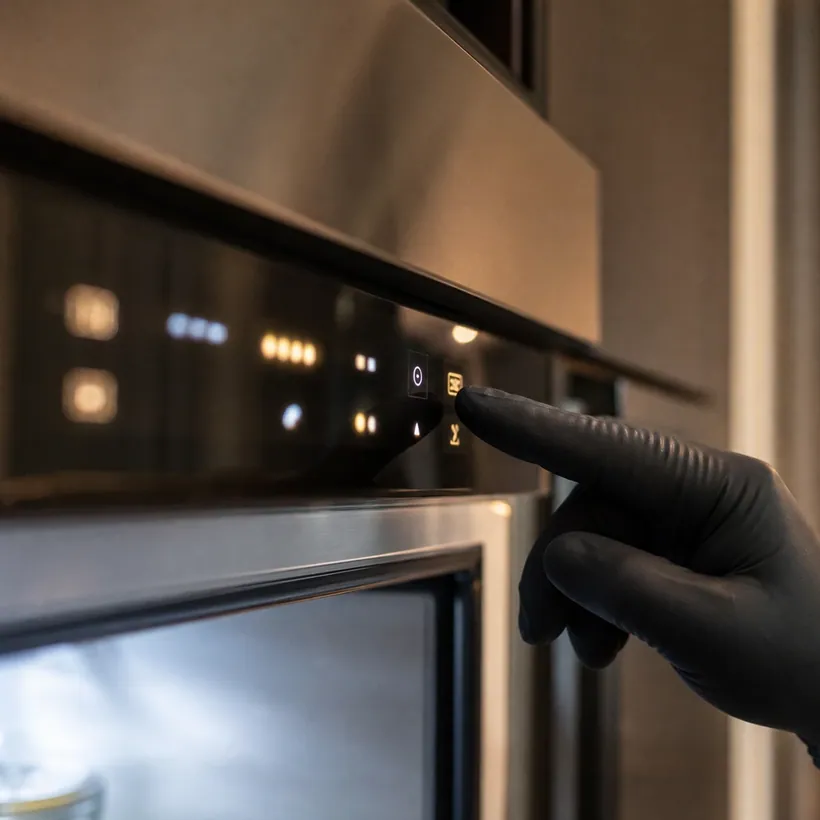
What Service means
A general service alert — the control detected a fault that needs diagnosis.
A “Service” alert is intentionally generic. The control has logged that something is outside spec, but the panel text alone does not tell you which subsystem. The actual diagnosis lives in service mode, where a technician reads the specific sub-code and live sensor data to separate a cheap sensor swap from a sealed-system issue.
The exact code text and behavior vary by model and generation — confirm against your unit’s service guide or call (650) 484-4687.
Likely causes, explained
A technician works through these from the most common and least costly toward the ones that need testing. Here is what each one actually means for your Service:
- Sensor out of range A temperature or evaporator sensor reading outside its expected range will trip a generic service flag even when cooling still seems normal.
- Communication fault between board and components If the main board loses reliable communication with a fan, valve, or display module, it logs a service condition rather than a specific symptom code.
- Component failure A failed component — fan motor, heater, or valve — can present first as a broad service alert before the specific sub-code is read in service mode.
What you can safely check
- 1
Photograph the exact panel text — including every digit — before you do anything. The specific code is what lets a technician match it to your model.
- 2
Note any temperatures and whether the cabinet is still cooling, then book a diagnostic.
- 3
Note whether the appliance is still cooling and write down any temperatures or unusual behavior. That context speeds up the diagnosis.
Safe rule of thumb: clean and inspect, but never open sealed refrigerant lines, bypass a gas safety, or force a locked-out oven to run. If the Service condition persists after the steps above, stop and book a diagnosis rather than swapping parts on a guess.
This alert rarely clears with an owner step alone — use the check to gather information, then book a diagnosis.
What to expect from a service visit
A typical Sub-Zero Service call runs in a predictable order. The technician reads the stored code in service mode, then tests the implicated parts with a meter rather than relying on a generic online lookup — important here, because Service can mean different things across model generations.
- Confirm the exact code and read live data in service mode
- Test the suspect parts to isolate the true cause before any quote
- Present a written quote — you approve before any work begins
- Fit genuine OEM parts and verify the code clears under load
The $89 service call is waived (deducted) from the total when you proceed, and labor is backed by a 365-day labor warranty. We dispatch independent specialists across San Francisco, the Peninsula, Silicon Valley, the South Bay, the East Bay, and Marin — most Sub-Zero calls are same-day.
When to call a technician
A “Service” alert is generic; a technician reads the specific sub-code in service mode to pinpoint the part.
An independent Sub-Zero technician reads the specific sub-code in service mode, tests the implicated parts, and fits genuine OEM components following manufacturer service specifications. The $89 service call is waived with the repair, backed by a 365-day labor warranty.
On which Sub-Zero models
Service appears on Sub-Zero built-in, integrated, and PRO refrigeration controls, but the exact wording, the entry/exit sequence, and what the code maps to differ by model and model year. A value that means one subsystem on an older control can mean something else on a newer one after a software revision. That is the single most important caveat with this code.
The exact code text and behavior vary by model and generation — confirm against your unit’s service guide or call (650) 484-4687.
Related Sub-Zero codes
If you are cross-checking symptoms, these related Sub-Zero alerts often appear in the same subsystem and are worth reading alongside Service:
- Vacuum Condenser — The control senses restricted airflow / overheating and asks you to clean the condenser.
- EC — An error code (EC) shown by the electronic control on newer built-in and integrated units.
- EC 40 — On many 600/700-series controls, an excessive-compressor-run condition.
For symptom-based help, see our appliance troubleshooting guides. Full coverage lives on our Sub-Zero refrigeration repair page, and typical part-and-labor ranges are on the Sub-Zero repair cost guide.
- Service call
- $89, waived with repair
- Warranty
- 365-day warranty on all labor
- Parts
- Genuine OEM parts
- Service area
- the San Francisco Bay Area
- Hours
- Same-day in most areas · 7 days
- Call
- (650) 484-4687
Sub-Zero Service — recent repairs
A few jobs that started with this exact Sub-Zero code or alert.
Service questions
What does a generic “Service” alert mean on a Sub-Zero?
It means the control logged a fault but is showing you the broad label rather than the specific cause. The real diagnosis is the underlying sub-code stored in service mode. Cooling may continue normally, or you may notice a temperature drift. Note what the cabinet is doing, photograph the panel, and have a technician read the stored code to identify the exact part.
My fridge still feels cold — do I really need service?
Yes, eventually. A “Service” alert means the control saw something out of spec, even if cooling looks fine right now. Some faults are intermittent and worsen over time, and a sensor reading just out of range today can become a temperature problem later. Booking a diagnostic while the cabinet is still cold is easier than after food has warmed.
Can I read the specific sub-code myself?
Entering service mode and interpreting sub-codes is generation-specific and not documented for owners, so it is easy to misread. The safe owner step is to note temperatures and whether cooling continues. A technician enters service mode, reads the stored sub-code and live sensor values, and maps them to the correct part for your exact model.
Will power-cycling clear the Service alert?
A single power-cycle may clear a transient flag, but if the underlying fault is real the alert will return — and repeated cycling can erase the stored data a technician needs. Try one off-and-on cycle; if “Service” comes back, stop, photograph it, and book a diagnostic so the sub-code stays available for an accurate read.
How much does diagnosing a Service alert cost?
Diagnosis starts with an $89 service call, which is waived (deducted) from the total when you proceed with the repair. The technician reads the stored sub-code, tests the implicated parts, and quotes before any work begins. Genuine OEM parts are used and labor is backed by a 365-day warranty, so a generic alert turns into a specific, priced fix.
Is a Service alert an emergency?
Usually not on its own — it is an attention-level prompt. The exception is if the cabinet is also warming or the freezer is softening, which points to an active cooling fault. In that case move perishables and book promptly. Otherwise, note the conditions and schedule a diagnostic at your convenience before the fault has time to progress.