Sub-Zero Sealed-System & Compressor Repair
The sealed system is your Sub-Zero's closed refrigerant circuit — compressor, condenser, evaporator and lines. When it fails you see a warm cabinet, a compressor that runs nonstop, or no cooling at all. But those same symptoms usually come from a dirty condenser, a fan, or a defrost fault. So a true sealed-system fault needs pressure and electrical evidence before any quote. It is honestly the costliest refrigeration repair — typically $900 – $2,400 — which is exactly why we confirm it first.
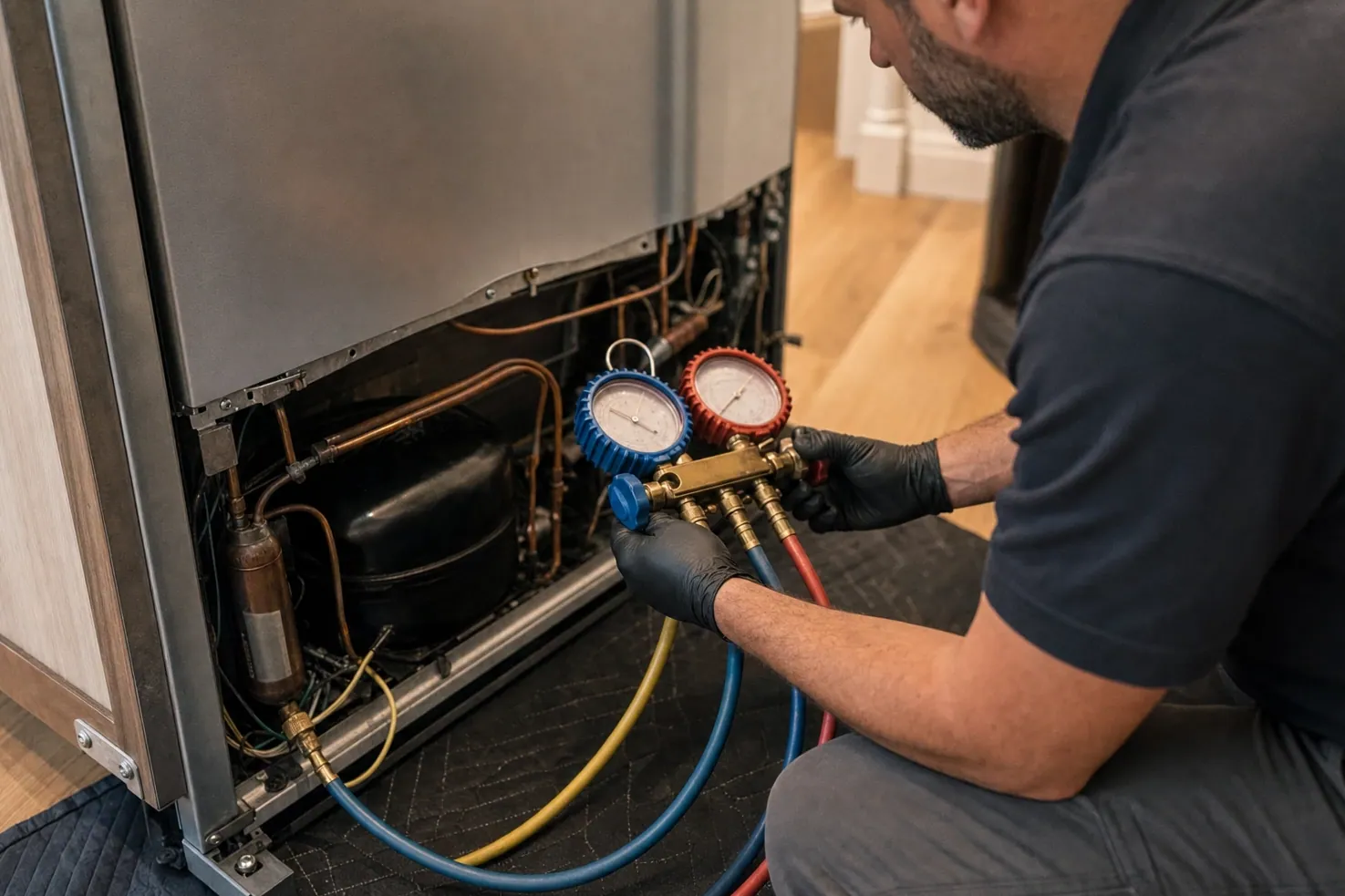
What the sealed system actually is
The sealed system is the heart of refrigeration: a closed loop of compressor, condenser, evaporator, filter-drier and capillary or metering line, charged with refrigerant and brazed shut at the factory. It pulls heat out of the cabinet and rejects it at the condenser. Because the circuit is sealed and pressurized, you cannot judge it from symptoms — diagnosis means putting gauges on the system and reading compressor electrical values, with refrigerant recovered and recharged under EPA handling rules.
That is why this is master-level work. We confirm the fault, install genuine OEM components, evacuate deeply, recharge to the exact spec, and verify cooling before we leave. If the symptom turns out to be airflow or defrost instead, you avoid an expensive repair you never needed — start with our Sub-Zero not cooling troubleshooting, then see overall service at Sub-Zero repair.
The proof matrix: looks-like vs. often-actually
The same symptom that could mean a sealed-system failure is far more often something simpler and cheaper. This is why we measure before we quote — the column on the right is what we actually find most of the time.
| Symptom | Could look like sealed system | Often actually |
|---|---|---|
| Fresh-food and freezer both warm | Refrigerant leak or failed compressor — no cooling anywhere. | Dirty condenser, seized condenser fan, or a control fault. Far more common. |
| Compressor runs constantly, never satisfies | Low refrigerant charge from a slow sealed-system leak. | Bad door gasket, blocked airflow, or a defrost failure icing the evaporator. |
| Freezer cold, fresh-food section warm | Capillary or evaporator restriction in the sealed system. | Evaporator-fan or damper fault, or a defrost problem — sealed system rarely fails one side only. |
| Unit clicks, hums, then shuts off | Seized compressor or failed start components. | Failed start relay/overload, or low-voltage — often a board or electrical fix, not the sealed system. |
| Warm with frost on the suction line | Refrigerant undercharge or restriction. | Heavy evaporator icing from a defrost fault backing up to the line. |
What a proper sealed-system repair involves
A sealed-system repair is not a single swap — it is a sequence of measured steps, each of which protects the next. Skipping any one of them is how a "fixed" unit fails again within months. Here is the work in order.
-
Confirm with instruments
Gauges go on the system and the compressor’s electrical values are read. Only a verified pressure or electrical fault — not a symptom — justifies opening the circuit.
-
Recover the refrigerant
The existing charge is recovered into a certified machine under EPA handling rules — never vented. This is a legal and environmental requirement, not an optional courtesy.
-
Replace the failed component
The compressor, filter-drier, evaporator or restricted line is replaced with a genuine OEM part and brazed in cleanly. The drier is always renewed on an opened system to capture moisture.
-
Deep evacuation
The circuit is pulled into a deep vacuum to remove every trace of air and moisture. Moisture left behind freezes at the metering point and chokes cooling — so this step is timed, not rushed.
-
Recharge to exact weight
Refrigerant is weighed in to the precise charge on the rating plate. A few grams off in either direction shows up as poor cooling or short-cycling on a Sub-Zero.
-
Verify before we leave
The unit runs through a full pulldown and the temperatures are confirmed stable. Every sealed-system repair is backed by our 365-day labor warranty.
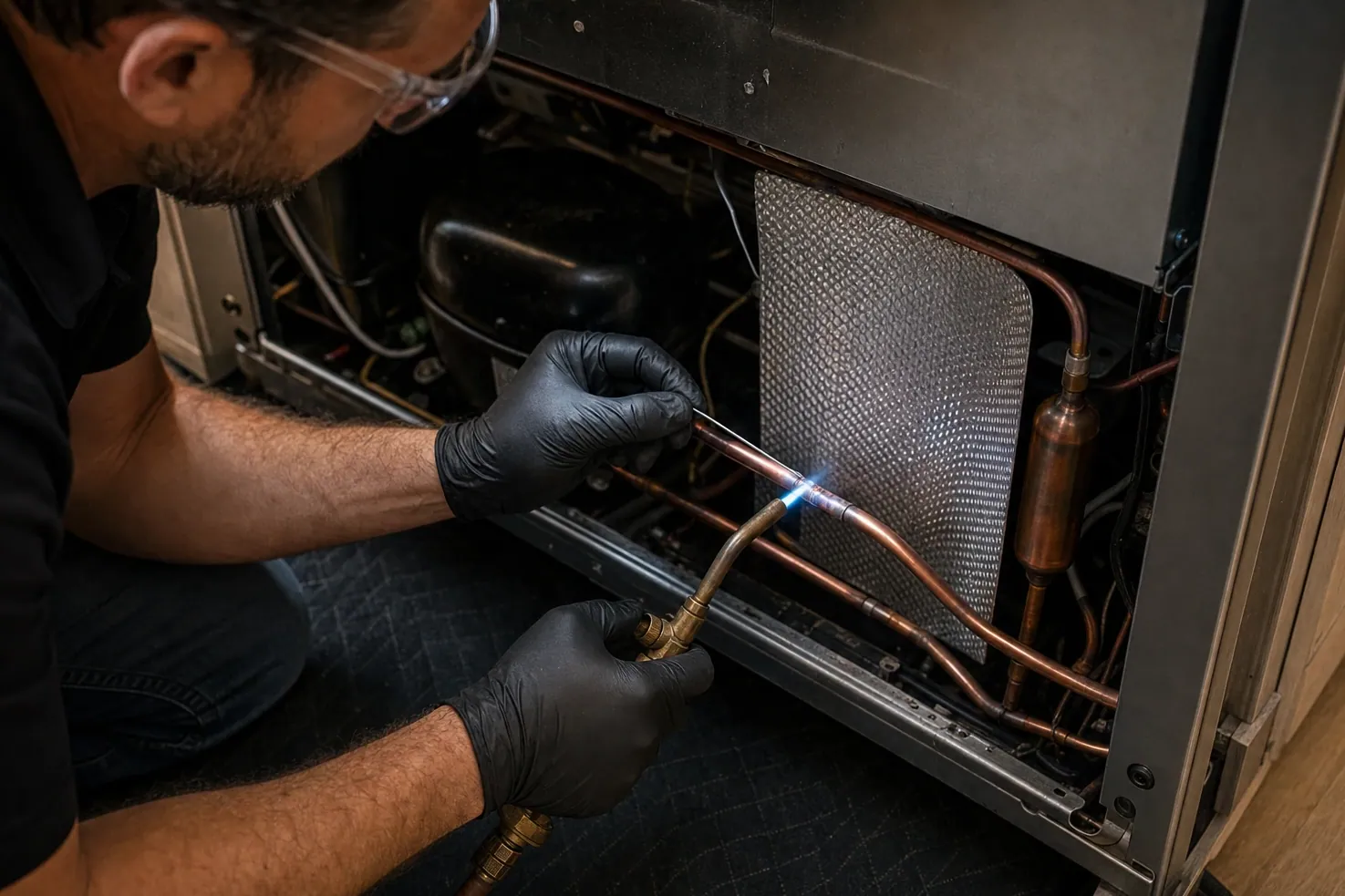
Symptoms worth a master technician
Warm on both sides
Fresh-food and freezer both warm at once. First rule out a clogged condenser and a stalled condenser fan — then it earns a pressure test.
Never stops running
A compressor that runs nonstop and never satisfies can mean a low charge — but check the door gasket, airflow and defrost first.
Clicks and shuts off
Click-hum-stop cycles often point to start relay, overload or voltage — electrical evidence separates that from a true compressor failure.
When to call: if the cabinet is warming and the simple checks above don't restore cooling, stop guessing. Sealed-system and compressor faults need instruments. The $89 diagnostic (45–90 min) is waived when you book the repair, and every repair carries our 365-day labor warranty.
What sealed-system work costs — and why
Requires pressure and electrical evidence before quote. It is the high end of refrigeration repair because it involves refrigerant recovery, a genuine OEM component, deep evacuation, an exact recharge and a verification run. We never quote it on symptoms alone. For the full line-by-line breakdown, see the Sub-Zero repair cost guide, and to weigh a major job against a new unit read our honest repair-or-replace guide.
Trusted on the repairs that matter most
Sealed-system & compressor FAQ
What is the sealed system on a Sub-Zero?
The sealed system is the closed refrigerant circuit: the compressor, condenser, evaporator, drier and connecting lines. It moves heat out of the cabinet. Because it is brazed closed and charged with refrigerant, it requires gauges and EPA-handled refrigerant to diagnose and repair — it cannot be assessed by symptom alone.
Why do you need pressure and electrical evidence before quoting?
A warm cabinet has many causes, and most are not the sealed system. Before any sealed-system quote we confirm it with pressure readings and compressor electrical tests. That prevents an expensive, unnecessary repair and ensures the quote matches the real fault.
How much does a sealed-system or compressor repair cost?
Sealed-system and compressor work is the high end of refrigeration repair, typically $900 – $2,400 and taking 2–6 h + parts, because it involves recovery, a new component, evacuation, recharge and verification. We only quote it after pressure and electrical evidence confirm the diagnosis. See the full breakdown on our cost guide.
Is a sealed-system repair worth it, or should I replace the unit?
On a sound cabinet under ~15 years old, a sealed-system repair is usually worth it. On a very old unit (15–25+ years) with cabinet wear, replacement can make more sense. Our repair-or-replace guide walks through the trade-off honestly.
How long does sealed-system work take?
Plan on 2–6 h + parts. Recovery, brazing, deep evacuation, accurate recharge and a verification run all take time, and a proper job is not rushed. We diagnose first — the $89 service call runs 45–90 min and is waived when you book the repair.
Do you use genuine refrigerant and OEM compressors?
Yes. We charge to the refrigerant type and exact weight printed on your unit’s rating plate, and we fit genuine OEM compressors and filter-driers, not generic substitutes. Refrigerant is recovered and handled under EPA rules. Matching the original spec is what keeps the system efficient and protects the 365-day labor warranty.
Why can’t the sealed system just be "topped up" with refrigerant?
A sealed system is a closed loop, so if it is low, refrigerant escaped through a leak that must be found and brazed first. Adding charge without repairing the leak only delays the same failure and wastes refrigerant. A correct repair recovers the old charge, fixes the breach, evacuates moisture, then recharges to exact weight.