Sub-Zero Repair or Replace? An Honest Guide
Sub-Zero built-ins are engineered to be serviced, not thrown away — the compressor, fans, gaskets, defrost parts and control boards are all replaceable. So most faults are worth repairing, especially on a sound cabinet under ~15 years old. Lean toward replacement only when a very old unit (15–25+ years) suffers a confirmed sealed-system or compressor failure, or when the cabinet and insulation have structurally failed. Diagnostic is $89, waived with the repair.
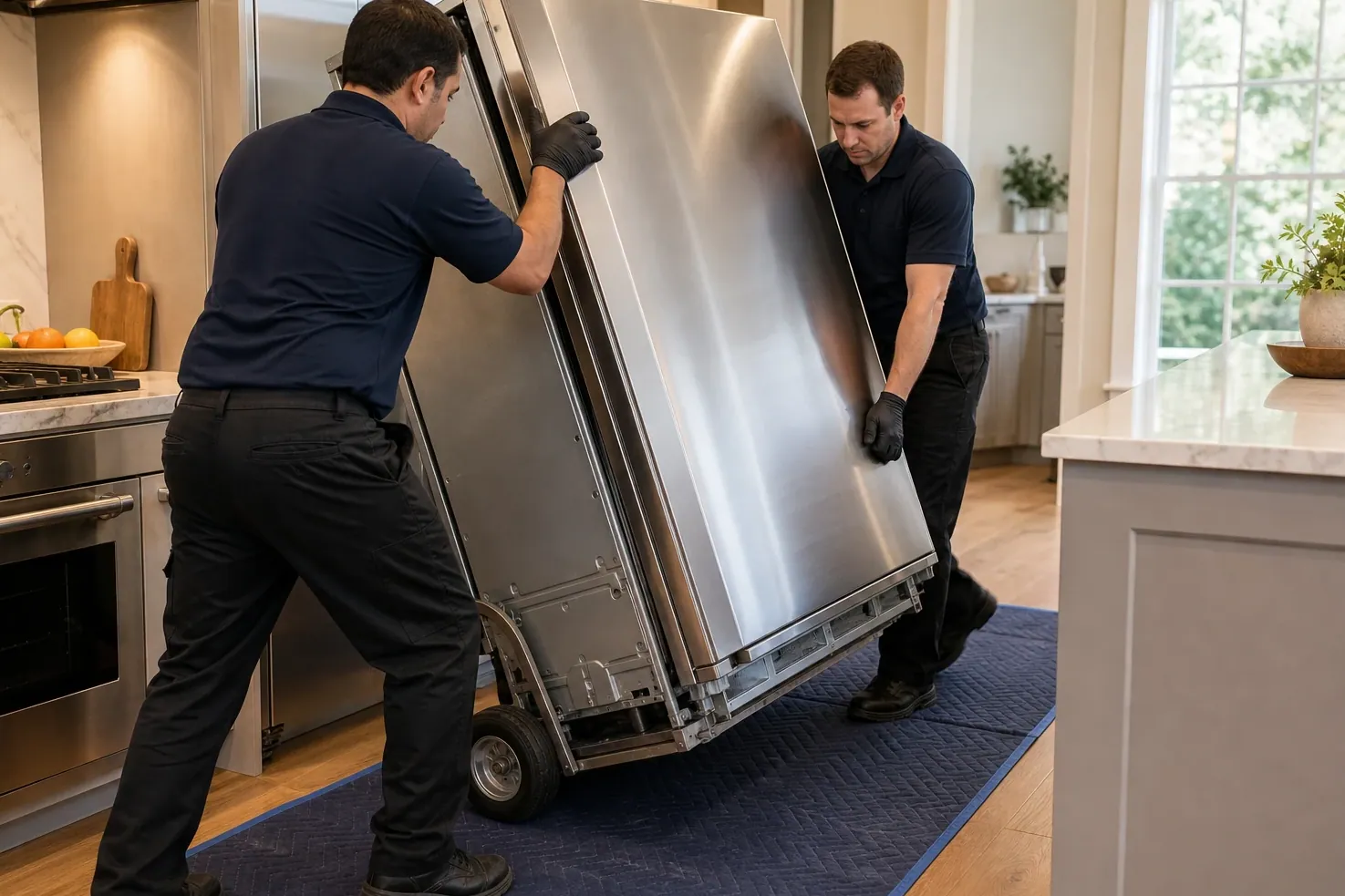
Built-ins are designed to be serviced
A Sub-Zero built-in is not a disposable box-store fridge. It is a modular, field-serviceable system with a design life north of twenty years. When something fails, it is almost always a single component — an evaporator or condenser fan motor, a door gasket, a defrost heater, or a control board — and every one of those is a replaceable part we install using genuine OEM components. That modularity is exactly why the repair-or-replace math so often favors repair.
Our job is to give you the measured truth, not to sell you a part. If a fault is a clean, economical fix, we say so. If a very old unit has a failure that genuinely caps its useful life, we say that too. For a line-by-line look at typical repair costs, see our Sub-Zero repair cost guide, and for the full service scope across brands and models visit Sub-Zero repair.
When to lean repair vs. replace
Use the situation in the left column to find which way the decision usually leans. The single biggest swing factor is the sealed system on a very old unit — that is the one repair whose payback genuinely depends on age, parts availability and cabinet condition.
| Situation | Lean repair | Lean replace |
|---|---|---|
| Unit is under ~15 years old | Almost always — boards, fans, gaskets and defrost parts are stocked and serviceable. | Rarely; only after a confirmed sealed-system failure with no parts available. |
| Single failed part (fan, gasket, control board, defrost heater) | Yes — a targeted repair restores full performance for a fraction of replacement cost. | No — replacing a whole built-in over one part is rarely worthwhile. |
| Cosmetic damage only (panel, handle, light, trim) | Yes — these are bolt-on parts; the cooling system is untouched. | No — function is intact; cosmetics do not justify replacement. |
| Sealed-system / refrigerant leak on a 15–25+ year unit | Possible if parts are available and the cabinet is sound. | Lean replace — a costly sealed repair on a very old cabinet has the weakest payback. |
| Cabinet, foam or liner failure (rust-through, water-logged insulation) | No — the structure itself is compromised. | Yes — when the box is failing, the appliance is at end of life. |
| Discontinued model with no parts available | Only if a verified equivalent OEM part exists. | Lean replace — no parts means no reliable long-term fix. |
Four questions that settle it
-
How old is the unit?
Under ~15 years, repair is almost always the right call. From 15 to 25+ years, a small fault is still worth fixing — but a major sealed-system failure is where replacement enters the conversation.
-
Is it one part, or the cooling system?
A fan, gasket, sensor or board is a routine, economical repair. A refrigerant leak inside the sealed system is the only failure that needs pressure and electrical evidence before a quote, and the only one that can tilt an old unit toward replacement.
-
Is the cabinet sound?
If the steel, foam insulation and liner are intact, the appliance has a future. Rust-through, water-logged insulation or a failed liner means the structure itself is at end of life — that is a genuine replace.
-
Are the parts available?
Most components are stocked or sourceable as genuine OEM. When a discontinued model has no verified equivalent part, a reliable long-term fix may not exist — and replacement becomes the honest recommendation.
The cost-and-age math, in plain terms
The decision is rarely emotional once you put real numbers on it. Two figures settle most cases: what the repair costs, and what a comparable replacement truly costs once installation is included.
If a repair costs less than roughly half of a comparable new built-in plus install, and the cabinet is sound, repair almost always wins. On a Sub-Zero that line sits in the thousands — so it is crossed far less often than people expect.
Replacing a built-in is not just the unit. Panel-ready trim, cabinet modifications and professional installation stack on top. A sealed-system repair that looks expensive in isolation is often a fraction of that all-in figure.
Age does not condemn a unit — it changes the odds. Under ~15 years, even a larger repair pays back over years of service. Past 25 years, a major fault on a worn cabinet is where the math finally tips toward replacing.
Three real-world scenarios
10-year-old BI-36, warm fresh-food side
The fault is an evaporator fan and a control board — both stocked OEM parts on a sound cabinet with years of life left. A targeted repair restores full cooling at a small fraction of replacement. Clear repair.
18-year-old built-in, torn gasket and defrost fault
Older, but the cabinet, foam and liner are intact and the parts are available. Two bolt-on repairs bring it back to spec. Even at 18 years, replacing the whole appliance over two parts makes no financial sense.
24-year-old unit, sealed-system leak + rusting liner
A costly sealed-system repair on a cabinet whose liner and insulation are already failing has the weakest payback of any case. Here we say it honestly: this one has reached end of life.
Honest calls — repair and replace alike
Repair-or-replace FAQ
Are Sub-Zero refrigerators meant to be repaired?
Yes. Sub-Zero built-ins are designed as serviceable, modular appliances with a 20+ year design life. Compressors, fans, gaskets, defrost parts and control boards are replaceable, so most faults are economical to repair rather than replace the whole unit.
When is it actually worth replacing a Sub-Zero instead of repairing it?
Replacement makes sense mainly when a very old unit (roughly 15–25+ years) suffers a sealed-system or compressor failure with no parts available, or when the cabinet, foam insulation or liner has structurally failed. A single failed part on a sound cabinet is almost always worth repairing.
How much does a major Sub-Zero repair cost versus a new built-in?
Most common repairs run a few hundred dollars; a sealed-system or compressor job is the high end. A new Sub-Zero built-in plus professional install runs into the thousands, so even a larger repair on a sound cabinet usually costs far less than replacement.
Does the diagnostic fee count toward the repair if I go ahead?
Yes. The $89 service call is waived when you book the repair, and all labor carries our 365-day labor warranty. That keeps the decision honest — you get a measured diagnosis before any larger commitment.
My unit is old but still cooling — should I pre-emptively replace it?
Not on age alone. A unit that holds temperature and runs quietly is doing its job. Plan for replacement only when a confirmed sealed-system fault or cabinet failure makes the repair uneconomical; otherwise keep servicing it.
Is there a simple rule of thumb for repair versus replace?
A useful starting point is the cost-versus-value test: if a repair costs less than about half of a comparable new built-in plus install, and the cabinet is sound, repair almost always wins. Sub-Zero built-ins are expensive to replace, so that 50% line sits much higher in dollars than it would on a box-store fridge — which is why repair stays the economical choice far longer.
Does replacing a built-in cost more than the appliance itself?
Often, yes. A Sub-Zero built-in is sized and panel-matched to your cabinetry, so replacement can mean trim kits, cabinet modifications and professional installation on top of the unit price. Those hidden costs are a major reason a targeted repair on a sound cabinet usually delivers far better value than swapping the whole appliance.