Clicks but won't light
An endless spark with no flame is usually moisture under the cap, a clogged port or a worn spark module rather than anything costly.
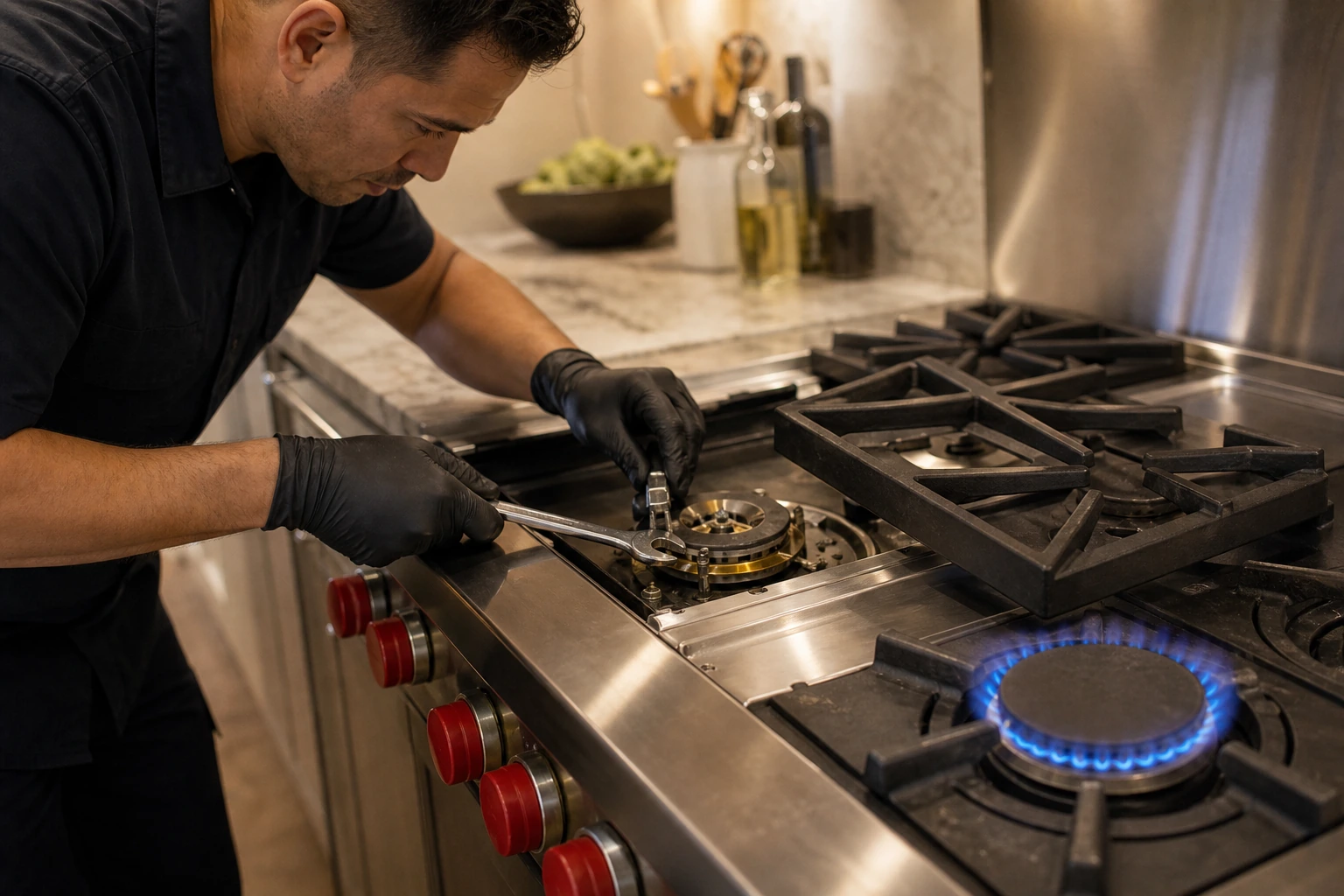
Gas, induction and electric cooking surfaces — ignition, spark modules and board faults, diagnosed before parts.
When a Wolf cooktop clicks but will not light, sparks on every burner at once, or leaves one zone dead on an induction top, the fix is usually a small, bounded one — not a new appliance. We repair Wolf gas cooktops, sealed-burner rangetops and induction cooktops across the Bay Area, with genuine OEM igniters, spark modules and electronics on the van. The $89 service call is credited to the repair, and the labor carries a 365-day warranty.
An endless spark with no flame is usually moisture under the cap, a clogged port or a worn spark module rather than anything costly.
A flame that lights on only part of the ring means a port blocked by boil-over or a cap that no longer sits flush on its base.
When all burners click together, the shared spark module is almost always the cause rather than the individual igniters.
On an induction cooktop a dead zone or a fault code points to the inverter board or coil — we test the board before quoting parts.
A faint gas smell, a flame that lifts off the port, or a valve slow to open is a safety issue we pressure-check before anything else.
A cooktop that clicks longest on the first cook of a foggy morning is the marine layer at work, not usually a failed part.
| Wolf cooktop type | What we cover |
|---|---|
| Sealed-burner gas cooktops | Drop-in gas cooktops — igniters, spark module, burner caps, valves and even flame. |
| Professional gas rangetops | Rangetop modules with a griddle, French top or grill — burner assemblies and thermostats. |
| Induction cooktops | Induction tops — inverter board, coils, fault codes and touch controls. |
| Electric / radiant cooktops | Radiant ceramic cooktops — surface elements, controls and thermal limiters. |
| Modular cooktops | Interchangeable burner, griddle and grill modules and their connections. |
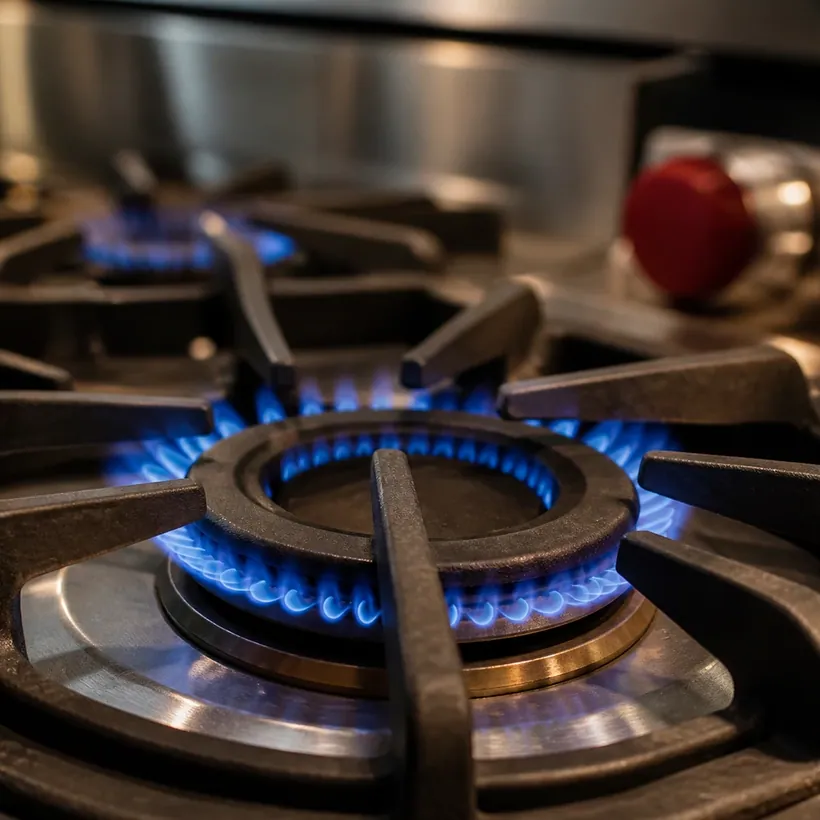
A Wolf cooking surface comes in three electrically and mechanically distinct forms, and the diagnosis splits at the start. A sealed-burner gas cooktop or professional rangetop lives on ignition — spark electrodes, a shared spark module, burner caps and the valves that meter gas — so its faults are mostly mechanical and inexpensive. An induction cooktop has no flame at all; it heats the pan directly through a coil driven by an inverter board, so a dead zone or a fault code is an electronics question, not a burner one. Electric radiant tops are different again, with surface elements under ceramic glass. We identify the surface type and exact model before quoting so the part we bring matches the machine. This page is the cooking surface only — if you also have oven trouble, see Wolf oven repair.
On a gas cooktop the click you hear is a spark jumping a small gap to light the gas, and a burner that clicks without catching is the call we field most. The usual order of suspects is moisture trapped under the cap after a spill, a port clogged with cooked-on residue, a cap sitting a hair off-center, and finally the spark module that drives the electrodes. A useful tell: if a single burner misbehaves, the fault is local to that burner; if all of them spark together and none light cleanly, the shared module is almost certainly the cause. We carry genuine Wolf igniters, modules and caps, test before we replace so you never pay for a guess, and our local clicking-cooktop guide covers the owner-side checks in more depth.
There is a distinctly Bay Area version of this fault. In kitchens near the water — Sausalito, Tiburon, Half Moon Bay and the San Mateo bayfront — a damp marine night settles moisture under the burner caps, so the cooktop clicks longest on the first cook of a foggy morning and clears once it has run a few minutes. It looks alarming but is rarely a failed part; it is the climate, sometimes paired with a kitchen that could ventilate better. Where drying and reseating do not settle it, the electrode, the ceramic insulator or the module is the next step, all bounded OEM repairs. For induction owners the coastal angle does not apply — there a fault is the board or coil, which we test directly. Either way a cooktop is almost never worth replacing over a single burner; the broader Wolf cooking service and the cost guide show how the rest fits together.
A few minutes with the burners off often pinpoints the problem, and sometimes clears it. None of these involve the gas line, the induction electronics or live wiring, which stay with a technician.
Try each burner in turn. A single slow-to-light burner is a local fault; every burner clicking together usually means the shared spark module — note which it is.
After a foggy night or a spill, switch the burner off and give the area under the cap time to dry; moisture bridging the spark gap is the most common cause of persistent clicking.
When cool, lift the cap and set it squarely back on its base so the electrode sits in its notch — a cap off-center will spark without lighting cleanly.
Clear any blocked flame ports with a wooden toothpick, never a metal pin, then check that the flame ring lights all the way around.
On an induction top, record any error code and the model rather than opening the unit — the inverter board and coil need a technician to test safely.
Anything beyond these checks is a job for a technician. Call (650) 484-4687 with your model and serial and we will confirm parts and the soonest window.
Often the owner-side part, yes. Switch the burner off, let any moisture under the cap dry, lift and reseat the cap squarely, and clear the ports with a wooden toothpick. If it still clicks without lighting once dry and clean, the electrode or the spark module needs service, which is a bounded genuine-part repair.
A Wolf gas cooktop shares one spark module across the burners, so when every burner clicks together and none light cleanly, that module is almost always the cause rather than the individual igniters. We test the module and the electrodes, then replace only what has failed with genuine Wolf parts.
Yes. Induction cooktops heat through a coil driven by an inverter board, so a dead zone or a fault code is an electronics issue we diagnose by testing the board and coil directly before quoting. We also service electric radiant cooktops — surface elements, controls and limiters under the ceramic glass.
It is common near the coast and the bay. A damp overnight marine layer leaves moisture under the burner caps, so the cooktop clicks longest on the first cook of the morning and settles once it warms up. Drying and reseating the caps usually resolves it; if it persists, a corroded electrode or the module is the next thing we check.
It is not immediately dangerous, but a burner that sparks without lighting releases small amounts of unburned gas, so do not force it. If a burner will not light, turn it off, ventilate the kitchen, and have it looked at. A faint gas smell or a flame that lifts off the burner is a safety issue worth a prompt service call.
Both. We service drop-in gas cooktops, professional rangetops with griddle or grill modules, and induction and electric tops. The service call is $89 and is waived when you book the repair; most cooktop parts — an igniter, a cap, a spark module — are modest, and we carry the common ones so many repairs finish in a single visit.
Independent service disclaimer. Wolf and Sub-Zero are registered trademarks of their respective owners. Sub-Zero, Wolf and Viking Appliance Services is an independent repair company and is not affiliated with, authorized by, or a factory service center for Wolf or Sub-Zero Group, Inc. We install genuine OEM parts and follow manufacturer service specifications.