Peninsula fog and your built-in Sub-Zero: the condenser story
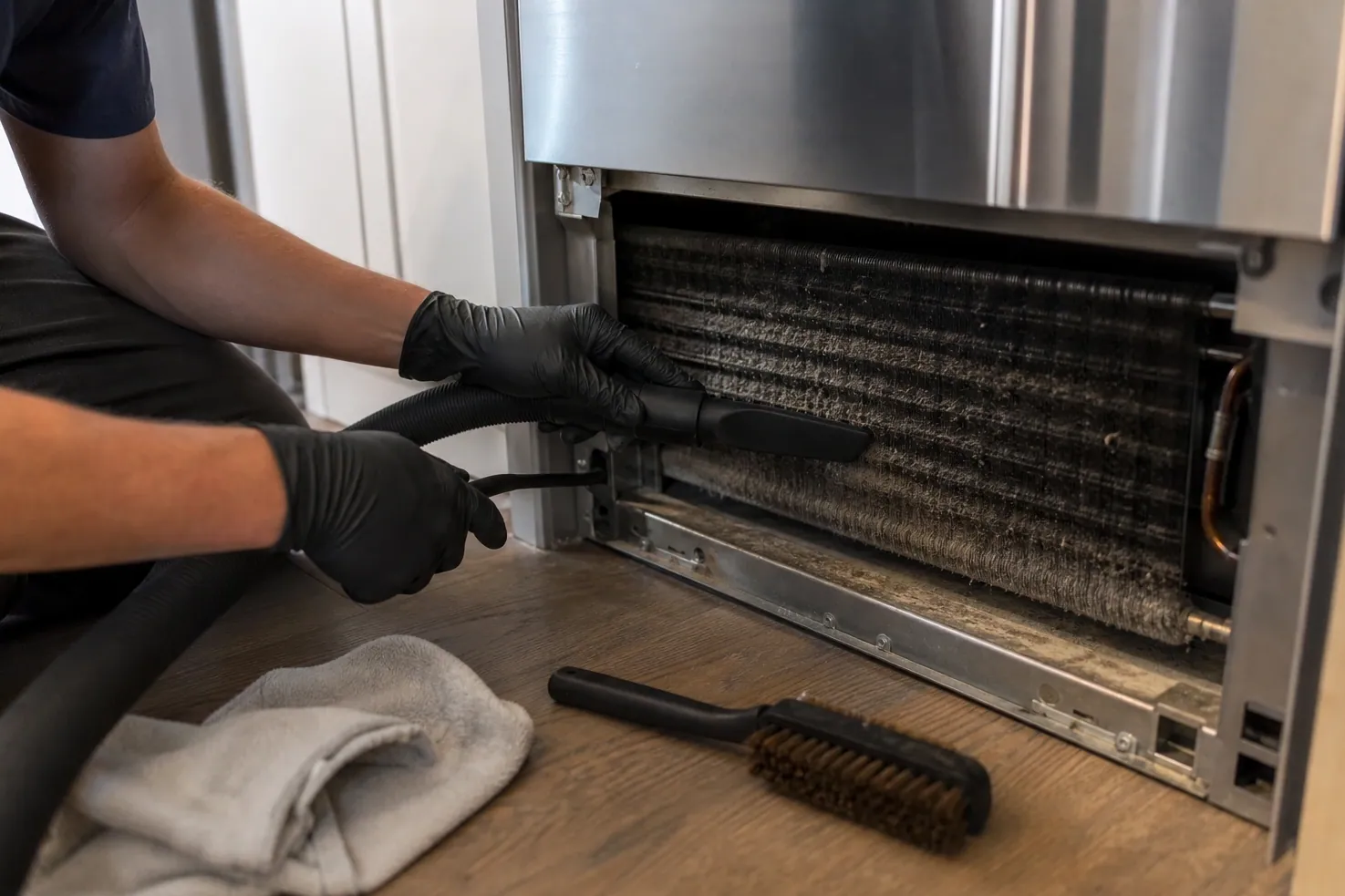
Our shop is on Chapin Avenue in Burlingame, a few minutes from where the fog comes over the San Bruno gap most summer afternoons. That single geographic fact shapes a surprising share of the Sub-Zero service calls we run up and down the Peninsula.
A built-in refrigerator is an air-cooled machine. It pulls room air across a condenser coil to dump heat, and the quality of that air — how damp, how dusty — quietly decides how hard the compressor has to work. From Daly City and South San Francisco down through San Bruno, Millbrae and Burlingame, that air carries the marine layer with it.
Why the marine layer reaches the coil
On a built-in Sub-Zero the condenser sits behind the upper grille, where it breathes the kitchen's air all day. In the fog belt that air arrives carrying fine moisture and the dust it picks up along the way. Over a couple of seasons that mixture cakes onto the coil fins as a felted grey layer.
A caked coil cannot shed heat efficiently. The compressor compensates by running longer and warmer, and the first thing an owner notices is a fresh-food side that drifts a degree or two warm on a hot afternoon, or a unit that simply never seems to rest. It is rarely a failed part at this stage — it is a coil that can no longer breathe.
The Peninsula pattern we actually see
Coastal-facing kitchens in Daly City, Pacifica-adjacent San Bruno and the bayfront flats of Foster City and San Mateo load their coils noticeably faster than homes a few miles inland in Hillsborough or the Atherton oak canopy. Add a household with pets or an open-plan kitchen that pulls in cooking grease, and the interval shortens again.
We also see more door-gasket sweating here. The same damp that loads the coil settles at the door line, so a gasket that sealed cleanly in spring can start to perspire and frost by the foggy end of summer — a second, cheaper symptom of the same climate.
The once-a-year habit that pays for itself
The single highest-value thing a Peninsula owner can do is have the condenser cleaned and the door gaskets checked once a year. A vacuum and soft-brush pass on the coil restores airflow, drops the compressor's run time and head temperature, and heads off the sealed-system strain that a chronically choked coil eventually invites.
We build that into a standard visit: pull the grille, clean the coil, verify the evaporator and condenser fans spin freely, and read box temperatures before and after. Our $89 service call is waived when any follow-on repair is needed, and the maintenance itself usually costs far less than the repair it prevents.
Questions & answers
How often should a Peninsula Sub-Zero condenser be cleaned?
Once a year for most homes. Coastal-facing kitchens in the fog belt — Daly City, San Bruno, the bayfront flats — or homes with pets benefit from a check every nine to twelve months.
Can I clean the condenser coil myself?
You can do the easy part: switch the unit off, pull the upper grille, and gently vacuum the coil with a soft brush. If the unit still runs warm afterward, or a fan is noisy, that points to a deeper issue and is worth a technician's look.
Is fog really enough to matter for an appliance?
Yes. It is not dramatic, but steady marine damp accelerates coil loading and gasket wear. It is why preventive cleaning pays back faster here on the Peninsula than it does in dry inland valleys.
More Bay Area repair guides
- Owner decision · 4 minSub-Zero Alternatives: How Thermador, Miele and Liebherr Compare in a Bay Area KitchenSub-Zero vs Thermador, Miele, Liebherr, Monogram, Dacor and True: a repair bench's read on every real Sub-Zero alternative, and when keeping yours wins.Read the guide →
- Undercounter & Drawer Units · 5 minSub-Zero Undercounter & Drawer Units: An Owner's Repair GuideHow Sub-Zero undercounter, beverage, and drawer units fail in island and bar installs, what repairs cost in the Bay Area, and when to repair or replace.Read the guide →
- Wolf E Series Case Story · 5 minThe Wolf E Series Oven Everyone Blamed on the BoardA Noe Valley Wolf E series wall oven died on bake while the broiler kept working. Everyone blamed the relay board. The meter blamed a $438 bake element.Read the guide →