Wolf Oven Not Heating Evenly: A Peninsula Owner's Guide
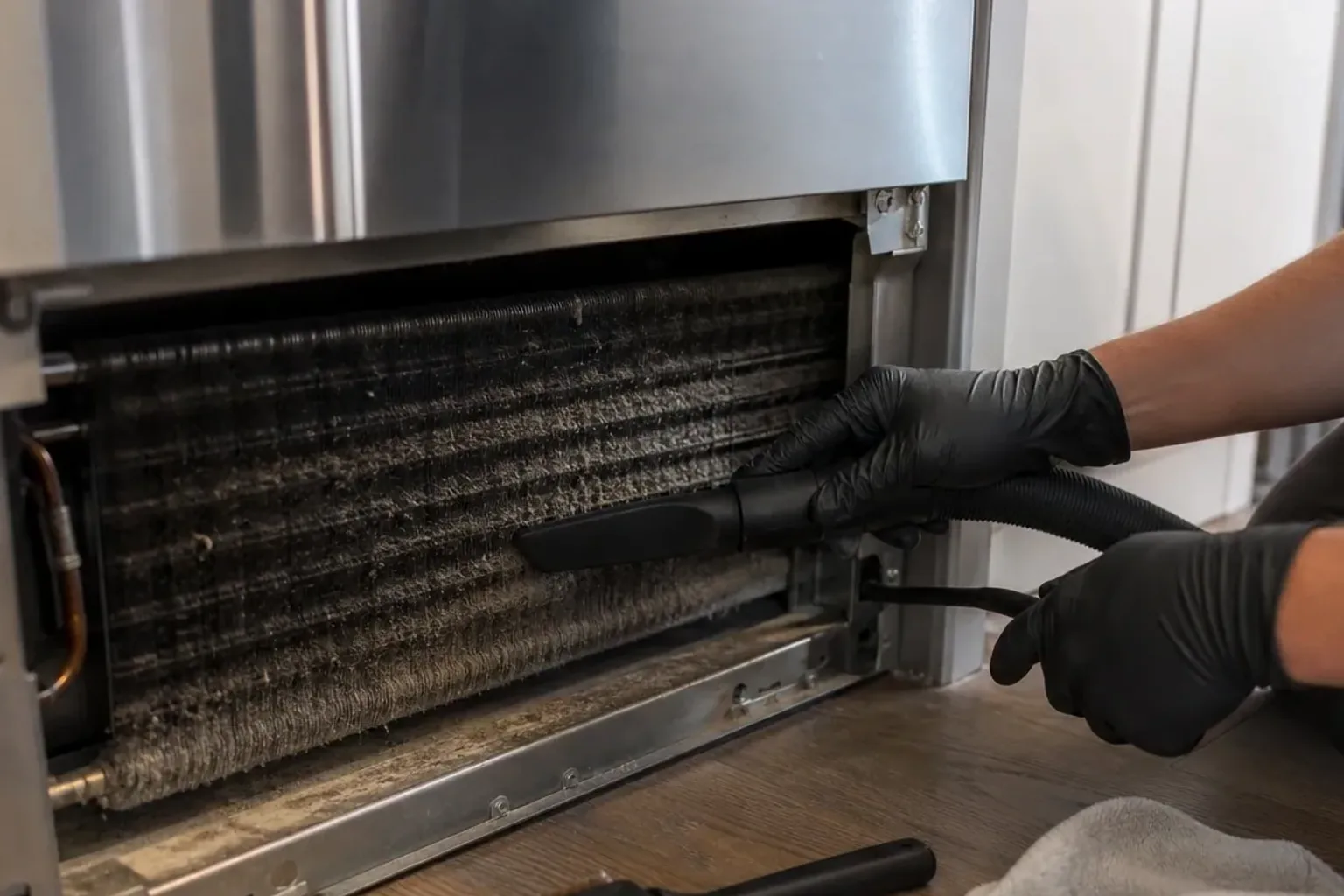
A healthy Wolf oven holds the center rack within about 15 degrees of a 350-degree set point, so when cookies brown on one side of the sheet or a cake domes in the middle, Peninsula cooks notice fast. In the remodeled kitchens of Hillsborough, Atherton, and Burlingame, these ranges and wall ovens anchor serious cooking, and uneven heat quickly turns a dinner party into guesswork.
Uneven baking usually traces back to one of a handful of causes, and only some of them are true faults. This guide explains how a Wolf oven is supposed to spread heat, how to separate a worn part from a calibration quirk, and which details to gather before you call a technician.
How a Wolf Oven Bakes Evenly
Most Wolf wall ovens and dual-fuel ranges use dual convection, meaning two heating elements paired with fans that circulate air so every rack sees the same temperature. Dual-stacked broil and bake elements let the oven blend radiant and forced heat, which is what produces that reliable, edge-to-edge browning.
When the system works, preheat is brisk and the interior holds a tight band around your set point. Understanding this baseline helps you judge whether a problem is a genuine fault or simply how you are loading and using the oven.
Common Causes of Hot and Cold Spots
A failed bake or broil element is the classic culprit; when one element weakens or burns out, the oven leans on the other and browning goes lopsided. A tired convection fan or motor is next, because slow airflow lets heat pool near whichever element is still strong.
Two more causes are easy to miss. A drifting temperature sensor reports the wrong reading, so the oven runs hot or cold across the whole cavity, and worn door hinges or a flattened gasket let heat leak out the front, leaving the door side cooler than the back.
Fault or Just Usage? The Oven Thermometer Test
Before assuming hardware failure, rule out habits. Overcrowded racks, dark pans, and opening the door too often all mimic uneven heat. Place a good oven thermometer on the center rack, set 350 degrees, and read it after a full preheat and again twenty minutes later.
A steady reading within about fifteen degrees of your set point points to a usage or calibration issue rather than a broken part. Wide swings, a slow climb, or a number far off your setting suggest a failing element, fan, or sensor that needs a closer look.
Calibration and Rack Position
If the thermometer reads consistently high or low but holds steady, the oven likely just needs an offset adjustment. Wolf controls allow a calibration change, and nudging the offset a few degrees often restores accurate baking without any parts at all.
Rack placement matters just as much. Keep bakeware centered, leave room for air to move around each pan, and avoid stacking two loaded sheets directly above each other. In convection mode, crowding is the fastest way to recreate the hot and cold spots you are trying to eliminate.
Why the Sensor Resistance Matters
The oven temperature sensor, or RTD, is a resistor whose value changes with heat. The control board reads that resistance to know the cavity temperature, so if the RTD drifts, every bake is off even when the elements and fan are perfect.
A technician measures the RTD's resistance cold and compares it to the expected value, typically around 1080 ohms near room temperature. A reading well outside spec confirms the sensor, an inexpensive part, as the cause before anyone considers the pricier control board.
When It Is the Control Board, and What to Have Ready
If the elements, fan, sensor, and door all check out, attention turns to the control board, which manages the heating cycles. A board that misfires relays can leave one element under-powered and baking uneven, though it is the least common of these faults.
When you call, have your model and serial number handy, note whether the problem shows in bake, convection, or broil, and describe your thermometer results. Mentioning recent symptoms, like a slow preheat or a specific error code, helps a Peninsula technician arrive with the right parts.
Questions & answers
Why does my Wolf oven brown food on one side only?
One-sided browning usually means a weakening bake or broil element or a slow convection fan, so the oven relies on the stronger heat source. An oven thermometer and a rack rotation test help confirm it.
Can I recalibrate a Wolf oven myself?
Yes, the control menu lets you set a temperature offset. If a thermometer shows a steady error, adjusting the offset is a safe first step, but wide swings point to a part that needs service.
How can I tell the sensor from the control board?
A technician measures the RTD sensor's resistance and compares it to spec. If the sensor reads correctly but the oven still bakes unevenly, the control board becomes the next suspect.
Does a worn door gasket really cause uneven baking?
It can. A flattened gasket or sagging hinges let heat escape at the front, so the door side of the cavity runs cooler and food nearest it bakes slower.
Is uneven heat worth repairing on a Wolf oven?
Usually yes. Wolf ovens are built for years of service, and most uneven-heat fixes involve an element, fan, or sensor rather than a full replacement, so repair keeps a premium range working. Sub-Zero, Wolf and Viking Appliance Services handles this locally — call (650) 484-4687.
More Bay Area repair guides
- Owner decision · 4 minSub-Zero Alternatives: How Thermador, Miele and Liebherr Compare in a Bay Area KitchenSub-Zero vs Thermador, Miele, Liebherr, Monogram, Dacor and True: a repair bench's read on every real Sub-Zero alternative, and when keeping yours wins.Read the guide →
- Undercounter & Drawer Units · 5 minSub-Zero Undercounter & Drawer Units: An Owner's Repair GuideHow Sub-Zero undercounter, beverage, and drawer units fail in island and bar installs, what repairs cost in the Bay Area, and when to repair or replace.Read the guide →
- Wolf E Series Case Story · 5 minThe Wolf E Series Oven Everyone Blamed on the BoardA Noe Valley Wolf E series wall oven died on bake while the broiler kept working. Everyone blamed the relay board. The meter blamed a $438 bake element.Read the guide →
| Thermometer test | Set 350 degrees; a steady reading within about 15 degrees points to calibration or usage, not a broken part |
|---|---|
| Sensor spec | The RTD should read roughly 1080 ohms near room temperature — drift throws off every bake |
| Usual suspects | Weak bake or broil element, slow convection fan, drifted sensor, worn door gasket; the control board is the least common |
| Same-day service | Sub-Zero, Wolf and Viking Appliance Services — (650) 484-4687 |
What Peninsula customers say
Our double wall oven was browning cakes on just one side. The tech traced it to a weak bake element and had it baking evenly again in one visit.
Preheat had gotten slow and the temperature kept drifting. It turned out to be the sensor. Clear explanation and honest pricing, no upsell.
Good work fixing our uneven convection fan. It took a follow-up call to get the calibration dialed in, but the oven bakes true now.
My Wolf range ran about 25 degrees hot for months. They checked the RTD, adjusted the offset, and now my roasts come out perfectly.
Book this repair: Sub-Zero Repair Cost Bay Area · Wolf Oven Repair Bay Area