Sub-Zero leaking water — where is it coming from?
Water inside or under a Sub-Zero is usually a blocked or frozen defrost drain, a leaking water-inlet line, or a door gasket letting in humid air that condenses. You can safely wipe up standing water and check the water-line connection; a frozen drain or sealed component needs a technician. $89 service call, waived with repair — call (650) 484-4687.
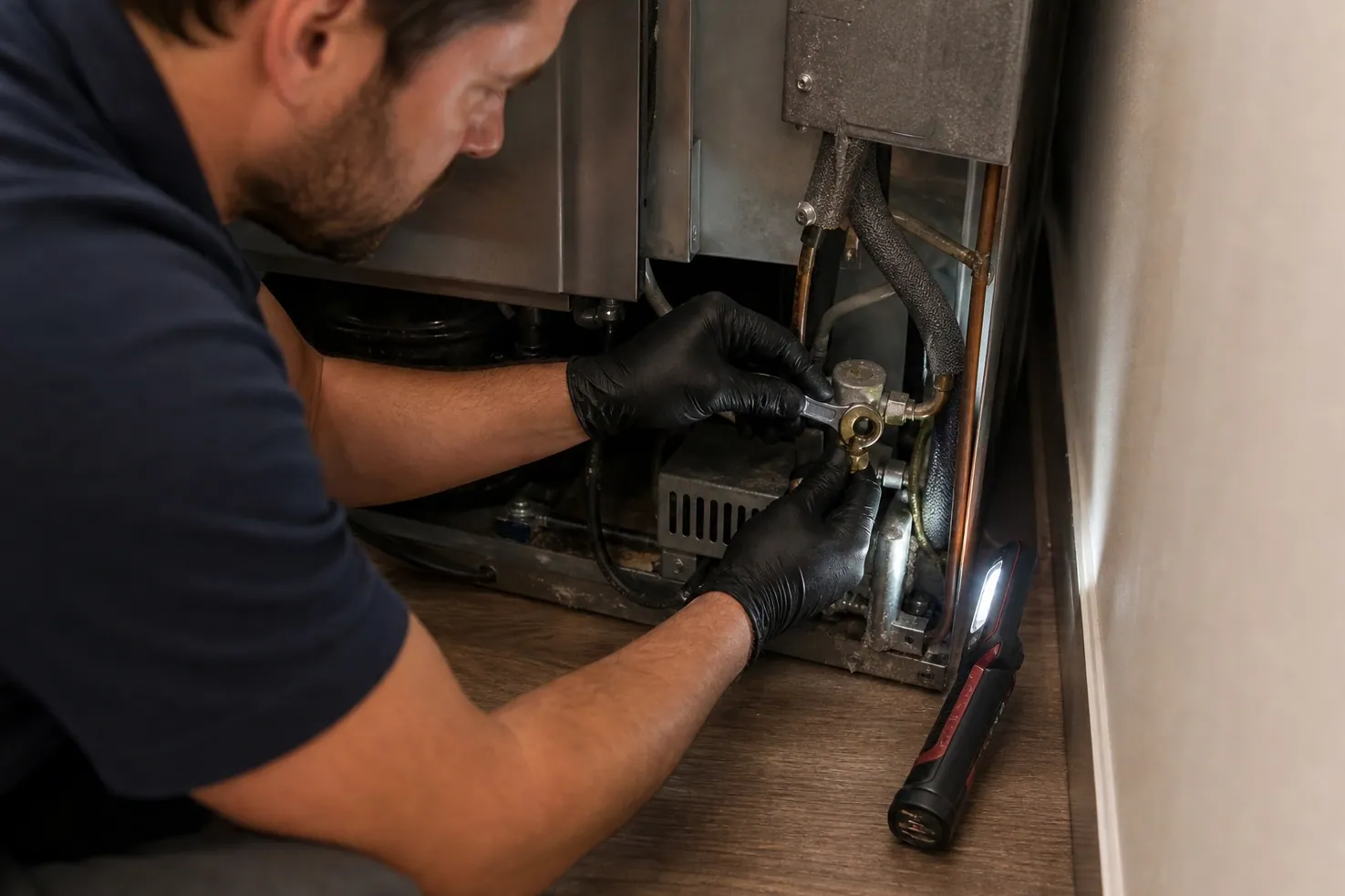
What the symptom usually means
| Symptom | Likely cause | What to do |
|---|---|---|
| Water pooling inside | Blocked defrost drain | Diagnostic — clear/clean drain line |
| Water on the floor | Water line / inlet valve leak | Check line connection; valve diagnostic |
| Moisture on walls | Door gasket / humidity | Replace gasket; check door seal |
Why this happens
Where the water shows up tells you most of the story. Water pooling inside the cabinet — under the crisper drawers or in the bottom of the freezer — almost always means the defrost drain is blocked or frozen. Every refrigerator melts a little frost during each defrost cycle and routes it to a drain; when that drain clogs with debris or freezes shut, the melt water backs up and pools inside instead of evaporating away.
Water on the floor or behind the unit usually points to the plumbing side: the household water line, the inlet valve, or the connection to the ice maker and dispenser. These leaks can be slow and easy to miss until the water reaches the flooring or the cabinetry beside the unit. Because a built-in sits flush in a cabinet, even a small ongoing drip can damage subfloor and millwork before it’s noticed, which is why a floor leak should never be left to “dry out.”
Moisture or condensation on the interior walls is a different problem — it points to a door gasket that no longer seals or a door left ajar, letting humid Bay Area air in to condense on cold surfaces. A worn gasket is a routine, repairable part, but it’s worth confirming because the same symptom can overlap with a drain issue.
What NOT to do
- Don’t ignore a floor leak — water can damage cabinetry and flooring.
- Don’t over-tighten water-line fittings.
Safe owner checks
- 1 Wipe up standing water and locate the source (inside vs. floor).
- 2 Check the water-line connection at the back for drips.
- 3 Inspect the door gasket for gaps or damage.
- 4 Book a diagnostic if the leak continues — note where it appears.
If these checks don't resolve it, the next step is a diagnostic. We confirm the cause on-site; the $89 service call is waived when you book the repair, and labor carries a 365-day labor warranty.
Models and series we service
Drain and gasket faults occur across built-in BI-series, classic 600/700 units, and integrated and Designer columns. Newer electronic models may post an EC code alongside a drain or sensor problem, while older units tend to show the symptom without any panel alert. Dual-zone and column configurations each have their own drain routing, so the access point varies by model and serial.
What to expect from a visit
A leak diagnostic starts by confirming where the water originates — interior pooling, floor, or wall condensation — then traces it to the drain, the water line, or the gasket. The technician clears and flushes a blocked drain, checks the defrost system that feeds it, tests water-line connections under pressure, and inspects the seal. The cause is confirmed and quoted before work begins, and most drain, line and gasket repairs are completed in one visit with genuine OEM parts.
Frequently asked questions
Why is water pooling at the bottom of my Sub-Zero?
Most often a frozen or blocked defrost drain. Each defrost cycle produces melt water that should drain away and evaporate; when the drain clogs with debris or freezes shut, that water backs up and pools inside the cabinet. It is a common, repairable fault — a technician clears and flushes the drain and checks the defrost system that feeds it.
Is water leaking onto the floor an emergency?
Treat it as urgent. A built-in sits flush in cabinetry, so even a slow drip from the water line or inlet valve can soak the subfloor and adjacent millwork before you notice. Wipe up standing water, check the line connection at the back for drips, and book a diagnostic promptly. Don’t over-tighten fittings yourself — that often cracks them and makes the leak worse.
Why is there condensation on the inside walls of my Sub-Zero?
Interior condensation usually means humid air is getting in — most often a door gasket that no longer seals fully, or a door that isn’t closing because of an overfull shelf or a sticky hinge. Bay Area humidity condenses on the cold interior surfaces. Inspect the gasket for gaps or damage; a worn seal is a routine, replaceable part.
Can I clear a blocked defrost drain myself?
We don’t recommend it on a built-in. The drain is often frozen rather than just clogged, and reaching it usually means partial disassembly of the freezer interior — easy to damage. Pouring hot water in rarely reaches the ice and can overflow. A technician thaws and flushes the drain properly and checks why it froze, so it doesn’t simply recur.
Will a leak damage my Sub-Zero’s electronics?
It can if it’s ignored. Water pooling inside or running down the back can reach control components, sensors and connectors over time, turning a simple drain or gasket repair into a larger one. That’s the main reason we treat leaks promptly — catching it early usually keeps it a routine, inexpensive fix rather than a control-board job.
How do you find where the water is coming from?
We start with where it appears: pooling inside points to the defrost drain, water on the floor points to the water line or inlet valve, and wall condensation points to the gasket. From there the technician traces and tests each suspect — flushing the drain, pressure-checking line connections, and inspecting the seal — to confirm the true source before quoting any repair.