Sub-Zero High Temp Alarm — Meaning & Fix
On Sub-Zero units, High Temp Alarm means The cabinet temperature rose above the safe set point. It is usually caused by door left open. You can safely confirm doors are closed, vacuum the condenser, and give it a few hours to recover. Because if temperature does not recover, the cooling system needs diagnosis to protect the food and compressor., you generally need a technician to confirm the exact part. Code text and behavior vary by model and generation, so verify against your service guide or call (650) 484-4687.
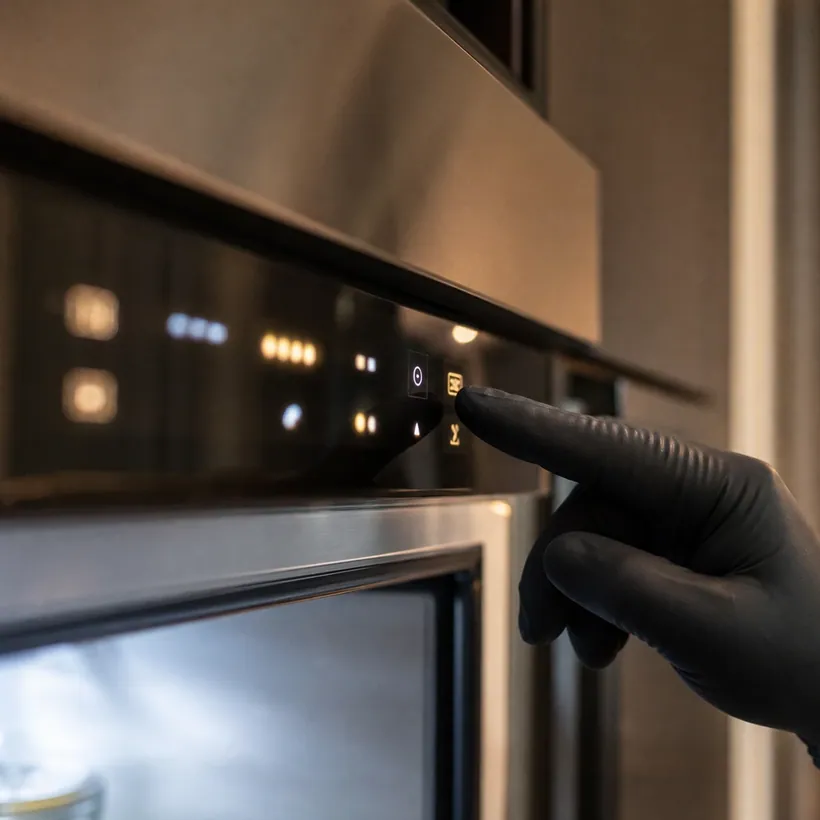
What High Temp Alarm means
The cabinet temperature rose above the safe set point.
A High Temp Alarm means the cabinet has risen above its safe set point — the control is protecting your food by warning you. The first moves are owner-level: confirm the door is closed and the condenser is clean, then give it a few hours. If the temperature does not recover, the cooling system has a fault and the alarm becomes urgent, both for the food and to avoid running a struggling compressor.
The exact code text and behavior vary by model and generation — confirm against your unit’s service guide or call (650) 484-4687.
Likely causes, explained
A technician works through these from the most common and least costly toward the ones that need testing. Here is what each one actually means for your High Temp Alarm:
- Door left open A door left open — even slightly, or after a big restock — lets the cabinet warm above the alarm threshold; closing it and waiting often clears the alarm.
- Dirty condenser / blocked airflow A dirty condenser or blocked grille airflow keeps the system from shedding heat, so temperatures climb especially in warm weather.
- Evaporator fan, defrost or sealed-system fault If the door is shut and the coil is clean, the cause is internal — a stalled evaporator fan, a defrost fault icing the coil, or a sealed-system problem — and the cabinet won’t recover on its own.
What you can safely check
- 1
Photograph the exact panel text — including every digit — before you do anything. The specific code is what lets a technician match it to your model.
- 2
Confirm doors are closed, vacuum the condenser, and give it a few hours to recover.
- 3
Note whether the appliance is still cooling and write down any temperatures or unusual behavior. That context speeds up the diagnosis.
Safe rule of thumb: clean and inspect, but never open sealed refrigerant lines, bypass a gas safety, or force a locked-out oven to run. If the High Temp Alarm condition persists after the steps above, stop and book a diagnosis rather than swapping parts on a guess.
What to expect from a service visit
A typical Sub-Zero High Temp Alarm call runs in a predictable order. The technician reads the stored code in service mode, then tests the implicated parts with a meter rather than relying on a generic online lookup — important here, because High Temp Alarm can mean different things across model generations.
- Confirm the exact code and read live data in service mode
- Test the suspect parts to isolate the true cause before any quote
- Present a written quote — you approve before any work begins
- Fit genuine OEM parts and verify the code clears under load
The $89 service call is waived (deducted) from the total when you proceed, and labor is backed by a 365-day labor warranty. We dispatch independent specialists across San Francisco, the Peninsula, Silicon Valley, the South Bay, the East Bay, and Marin — most Sub-Zero calls are same-day.
When to call a technician
If temperature does not recover, the cooling system needs diagnosis to protect the food and compressor.
An independent Sub-Zero technician reads the specific sub-code in service mode, tests the implicated parts, and fits genuine OEM components following manufacturer service specifications. The $89 service call is waived with the repair, backed by a 365-day labor warranty.
On which Sub-Zero models
High Temp Alarm appears on Sub-Zero built-in, integrated, and PRO refrigeration controls, but the exact wording, the entry/exit sequence, and what the code maps to differ by model and model year. A value that means one subsystem on an older control can mean something else on a newer one after a software revision. That is the single most important caveat with this code.
The exact code text and behavior vary by model and generation — confirm against your unit’s service guide or call (650) 484-4687.
Related Sub-Zero codes
If you are cross-checking symptoms, these related Sub-Zero alerts often appear in the same subsystem and are worth reading alongside High Temp Alarm:
- Vacuum Condenser — The control senses restricted airflow / overheating and asks you to clean the condenser.
- Service — A general service alert — the control detected a fault that needs diagnosis.
- EC — An error code (EC) shown by the electronic control on newer built-in and integrated units.
For symptom-based help, see our appliance troubleshooting guides. Full coverage lives on our Sub-Zero refrigeration repair page, and typical part-and-labor ranges are on the Sub-Zero repair cost guide.
- Service call
- $89, waived with repair
- Warranty
- 365-day warranty on all labor
- Parts
- Genuine OEM parts
- Service area
- the San Francisco Bay Area
- Hours
- Same-day in most areas · 7 days
- Call
- (650) 484-4687
Sub-Zero High Temp Alarm — recent repairs
A few jobs that started with this exact Sub-Zero code or alert.
High Temp Alarm questions
What does a High Temp Alarm mean on a Sub-Zero?
It means the cabinet temperature climbed above the safe set point and the control is warning you to protect the food. Common causes range from a door left open or a restock of warm groceries, to a dirty condenser, to an internal fault in the evaporator fan, defrost, or sealed system. Confirm the door is shut and the coil is clean, then watch whether it recovers.
What should I do the moment a High Temp Alarm appears?
First confirm every door and drawer is fully closed and nothing is blocking a gasket. Then check the condenser coil and grille airflow and vacuum if needed. Give the unit a few hours to pull back down. If temperatures keep rising or don’t recover, move perishables to another unit and book a diagnostic — the cooling system likely has a fault.
How long should I wait for the temperature to recover?
After closing the door or cleaning the coil, give the unit two to four hours to pull back to set point, especially after a big restock when it has extra heat to remove. If it’s still above set point or climbing after that window, stop waiting — an internal fault won’t fix itself, and a struggling compressor running for hours adds wear. Book service.
Is my food still safe during a High Temp Alarm?
It depends how high and how long. Refrigerated food is generally safe below 40°F; above that for more than about two hours, perishables become a risk. If the cabinet is clearly warming and not recovering, move perishables to a working unit or cooler. Frozen food that has started to thaw should be assessed before refreezing. When in doubt, prioritize food safety.
Why won’t my Sub-Zero recover after I cleaned the coil and closed the door?
If the obvious causes are ruled out and it still won’t hold temperature, the fault is internal. A stalled evaporator fan stops cold air from circulating; a defrost fault lets ice insulate the coil; and a sealed-system problem — low charge or a restriction — cripples cooling outright. All three need a technician to test and confirm, then repair with genuine parts.
Is a High Temp Alarm an emergency?
Treat it as urgent. Food safety is on the line and a cooling system running hard to recover can be damaged if the real issue is internal. If the cabinet recovers quickly after a door or coil fix, you’re fine. If it doesn’t, move perishables and book promptly. Same-day service is available across the Bay Area for exactly this kind of call.