Sub-Zero wine cooler not cooling or not holding temperature: causes & fixes
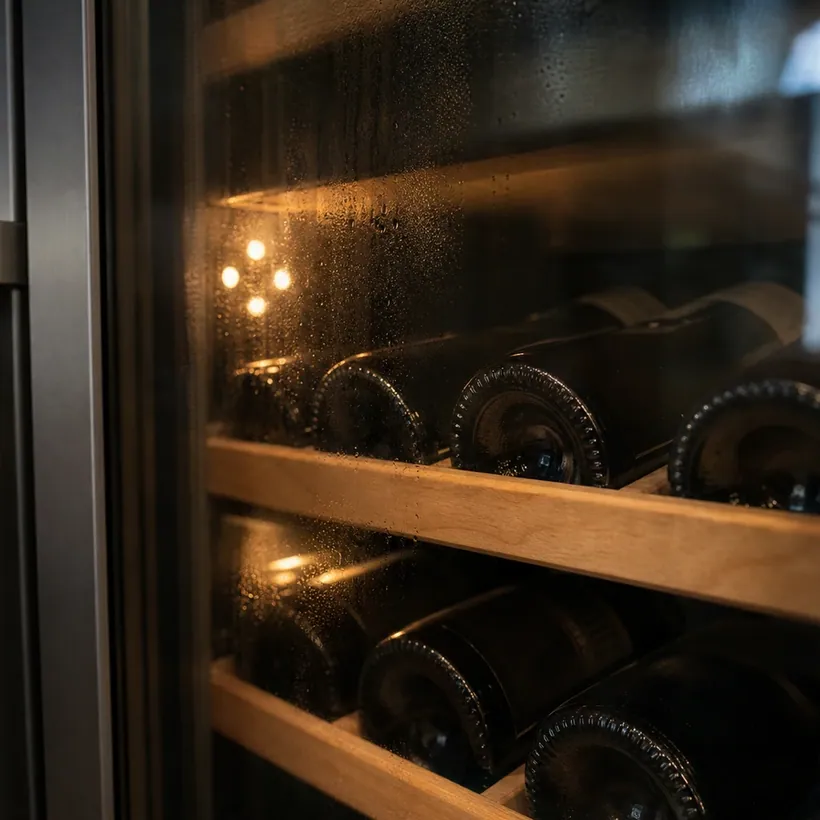
A Sub-Zero wine cooler that will not cool, or that drifts off its set temperature, is almost always one of five things: a dust-choked condenser coil, a failing evaporator fan, a drifting zone sensor, a damper stuck part-open, or a worn door seal. A genuine sealed-system or compressor fault is the rarest cause of the group.
That ranking matters, because it tells you where an honest diagnosis starts — at the cheap, common end and earning its way to the expensive one, never the other way around. Most wine-unit "not cooling" calls we run from our Burlingame base end in a single bounded part, not a written-off cabinet. Below is how the unit is meant to hold temperature, the five usual causes in order, what you can safely check before you call, and the point at which it becomes a sealed-system question.
How a Sub-Zero wine unit is supposed to hold temperature
A Sub-Zero wine cooler is not a beverage fridge with a thermostat dial — it is a precision box that holds a narrow band by reading the air with thermistors and feeding a control board that pulses the cooling. A built-in wine column (the 424, 427 and 430 families) and an undercounter unit both work the same way: a compressor and condenser reject heat at the grille, an evaporator chills a coil, and an evaporator fan pushes that cold air across the bottles.
On a dual-zone unit the clever part is the damper. Rather than running two separate cooling systems, most dual-zone Sub-Zero wine units cool from one evaporator and split the air with a motorized damper, so the upper and lower zones can sit at different set points. That design is reliable, but it also means a single drifting sensor or a sticky damper can throw one zone off while the other behaves perfectly — a clue we lean on heavily during diagnosis. If you want the storage targets those zones should hold, our wine storage care guide lays them out, and the symptoms below map onto the work we describe on the wine refrigerator repair page.
The five common causes, ranked
Here is the order we actually work a "not cooling" wine unit, from the most common and cheapest to the rarest and most involved. Use it as a map for what to suspect, not a repair manual — refrigerant and sealed components are professional-only.
| Cause | What you'd notice | DIY check | Typical verdict |
|---|---|---|---|
| Dust-choked condenser coil | Whole cabinet slowly warms; compressor runs nonstop, worst on hot afternoons | Vacuum the coil behind the lower grille | Often a homeowner clean; bounded repair if a fan is involved |
| Failed evaporator fan | Cabinet stays warm even though the compressor runs and the coil is clean | Listen for the soft interior fan with the door open | Fan-motor replacement — common and contained |
| Drifting zone sensor (thermistor) | A zone reads on-target but feels warm, or the temperature wanders | Compare the shelf against an independent thermometer | Sensor test and replacement — not a DIY part |
| Damper stuck part-open or closed | One zone of a dual-zone unit will not hold its set point | No reliable home check — needs diagnosis | Damper / airflow repair |
| Worn or hardened door seal | Door edge sweats or frosts; the unit never quite reaches set point | The paper-slip drag test (see below) | OEM gasket replacement |
| Sealed-system / compressor fault | Cabinet sits near room temperature with little cold despite power | None — professional only | Measured before any quote; the least common cause |
What you can safely check before you call
Two of the five causes — a dirty condenser and a failing door seal — are things an owner can reasonably check, and clearing them sometimes restores cooling without a visit. Work through these in order; if cooling has not recovered after the condenser is clean and the door seals, the fault is internal and wants a technician.
- Confirm the set temperature and give it time. Make sure the panel still shows your target and that the unit has had several hours to recover since a long door opening or a power interruption.
- Check airflow at the grille. A built-in column breathes through the toe-kick or top grille; clear any obstruction and feel whether warm air is leaving the vent.
- Unplug it and vacuum the condenser. A dust mat on the coil behind the lower grille is the single most common reason a wine unit cools weakly — clean it gently with a brush and vacuum.
- Run the paper-slip door test. Close the door on a slip of paper; if it pulls out with no drag, the gasket is leaking warm air and needs replacing.
- Listen for the evaporator fan. With the door open you should hear a soft interior fan; silence usually points to a failed fan motor.
- Note any error light, the temperatures and your model and serial, then book a technician if cooling has not returned.
Do not add refrigerant, open the sealed system, or pull the unit out by its plumbing — those are professional and, for refrigerant, legally restricted tasks. Knowing your model and serial first speeds everything up; our model-number guide shows where Sub-Zero hides the rating plate on wine units.
When it's the sealed system — and when it isn't
Owners often fear the worst — a dead compressor or a refrigerant leak — but on wine units that is genuinely the rarest outcome, and it is the one we rule in last, only after the gasket, condenser, fan and sensors are cleared. A true sealed-system fault has a distinct signature: the cabinet sits close to room temperature, the compressor either never runs or runs without producing cold, and the symptom does not budge after a coil clean. We confirm it with pressure and electrical evidence before we ever quote a major part, so you never pay for a guess.
The reassuring news is the cost split. The cheap, common repairs — a gasket, a fan, a sensor — are bounded jobs, while sealed-system work sits at the top of the range and is uncommon on wine units. Our wine repair cost guide breaks down the honest ranges part by part. Either way there are no forms and no email tag: book online or call (650) 484-4687, and the $89 service call is waived when the repair goes ahead, with a 365-day labor warranty on what we fix.
Terms, defined
- Evaporator fan
- The interior fan that circulates chilled air across the bottles. If it fails, the cabinet warms even while the compressor runs and the coil is clean.
- Damper
- A motorized flap that splits cold air between zones on a dual-zone unit cooled by a single evaporator. A stuck damper lets one zone drift while the other holds.
- Zone sensor (thermistor)
- A temperature probe that tells the control board how warm a zone is. When it drifts, the unit can read on-target while actually running warm or cold.
- Condenser coil
- The coil behind the lower grille that sheds heat. A dust mat here is the most common reason a wine unit cools weakly — and the easiest to clean.
- Sealed system
- The closed refrigerant circuit of compressor, evaporator and condenser. Repairs here are professional-only and the rarest cause of a wine unit not cooling. See our sealed-system page.
- Set point
- The temperature you program for a zone. A wine unit's job is to hold the set point steadily — stability matters more to the wine than the exact number.
Questions & answers
Why is only one zone of my Sub-Zero wine cooler warm?
On a dual-zone unit both zones usually share one evaporator and split the cold air with a motorized damper. One warm zone therefore points to a drifting zone sensor or a damper that is no longer modulating — both bounded repairs, not a failed cabinet. We confirm with a calibrated probe before replacing anything.
My wine cooler runs constantly but won't get cold — what is it?
A unit that runs nonstop yet stays warm is most often starved of airflow: a condenser coil choked with dust or a failed evaporator fan. Clean the coil behind the lower grille first. If it still cannot reach set point with a clean coil and a good door seal, the evaporator fan or the sealed system is the next thing to check.
Can I fix a wine cooler that's not cooling myself?
You can safely clean the condenser coil, clear the grille airflow and test the door seal — those clear the two most common causes. Sensor, fan, damper and any refrigerant work need a technician, and adding refrigerant or opening the sealed system is legally restricted to certified pros. When a coil clean and a good seal don't restore cooling, it is time to call.
How cold should a Sub-Zero wine cooler be?
Most reds sit around 55 to 64°F and whites a little cooler, with long-term storage held steady near 55°F. The exact number matters less than keeping it stable. Our wine storage care guide lists the targets for each wine type and explains why a steady temperature beats a colder one.
More Bay Area repair guides
- Owner decision · 4 minSub-Zero Alternatives: How Thermador, Miele and Liebherr Compare in a Bay Area KitchenSub-Zero vs Thermador, Miele, Liebherr, Monogram, Dacor and True: a repair bench's read on every real Sub-Zero alternative, and when keeping yours wins.Read the guide →
- Undercounter & Drawer Units · 5 minSub-Zero Undercounter & Drawer Units: An Owner's Repair GuideHow Sub-Zero undercounter, beverage, and drawer units fail in island and bar installs, what repairs cost in the Bay Area, and when to repair or replace.Read the guide →
- Wolf E Series Case Story · 5 minThe Wolf E Series Oven Everyone Blamed on the BoardA Noe Valley Wolf E series wall oven died on bake while the broiler kept working. Everyone blamed the relay board. The meter blamed a $438 bake element.Read the guide →