Sub-Zero wine storage not holding temperature
A Sub-Zero wine unit that drifts warm is usually a dirty condenser, a failing fan or sensor, or a sealed-system fault — and stable temperature matters for the collection. You can safely clean the condenser and confirm the door seals; sealed and electronic work needs a technician. We service 400-series and dual-zone wine columns across the Bay Area — $89 service call, waived with repair. Call (650) 484-4687.
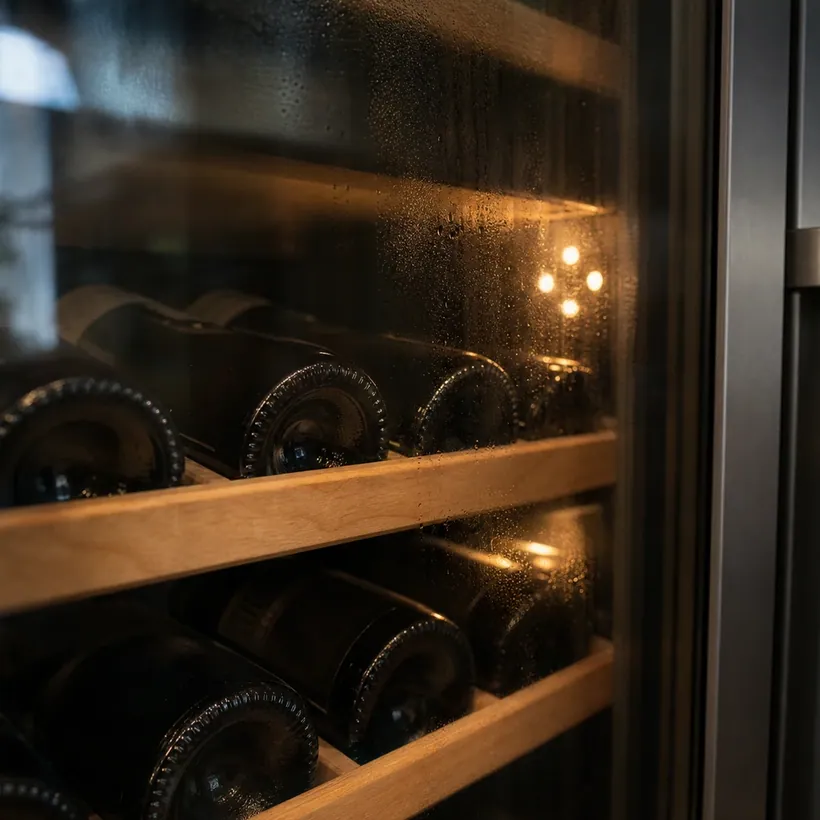
What the symptom usually means
| Symptom | Likely cause | What to do |
|---|---|---|
| One zone drifts warm | Damper, fan or sensor | Diagnostic on affected zone |
| Whole unit warm | Condenser or sealed system | Clean condenser; tech diagnosis |
| Condensation / humidity off | Gasket or humidity control | Gasket and control check |
Why this happens
Wine storage is less forgiving than a refrigerator: it’s the stability of the temperature, not just the number, that protects the collection. A unit drifting a few degrees warm — or swinging up and down — can age wine prematurely and push corks, so a wine fault is worth treating promptly rather than waiting to see if it settles. The good news is that most causes are the same routine, repairable items found in any Sub-Zero refrigeration, just in a temperature-critical package.
A dirty condenser is the most common culprit. Wine units are often tucked into millwork with limited ventilation, so a dust-clogged condenser or a blocked vent quickly leaves the system unable to reject heat, and the whole cabinet drifts warm. Cleaning the condenser and confirming the unit can breathe is the safe first step. When only one zone of a dual-zone unit drifts while the other holds, the fault usually sits in that zone’s damper, fan or sensor rather than the shared system.
A drifting temperature sensor is a frequent and easily missed cause: if the sensor reads wrong, the control holds the cabinet at the wrong temperature even though everything else works. Condensation or humidity that feels off points instead to the door gasket or the humidity control. Sealed-system faults are less common but possible, and like all refrigerant work they need a technician with the right equipment.
What NOT to do
- Don’t move the collection repeatedly through temperature swings.
- Don’t block the unit’s ventilation.
Safe owner checks
- 1 Vacuum the condenser and confirm airflow.
- 2 Check the door gasket and seal.
- 3 Note which zone(s) drift and by how much.
- 4 Book a diagnostic to protect the collection.
If these checks don't resolve it, the next step is a diagnostic. We confirm the cause on-site; the $89 service call is waived when you book the repair, and labor carries a 365-day labor warranty.
Models and series we service
We service Sub-Zero 400-series wine storage, single- and dual-zone wine columns, and integrated and Designer wine units. Dual-zone units have independent dampers and sensors for each zone, so a single drifting zone narrows the diagnosis quickly. Newer electronic units may post a service alert, while older models tend to show only the temperature symptom — so the path varies by model and serial.
What to expect from a visit
A wine-unit diagnostic prioritizes the collection: the technician confirms how far and which zones are drifting, cleans and checks the condenser and ventilation, tests the sensors, dampers and fans, and verifies the door seal before moving to sealed-system pressures if needed. The cause is confirmed and quoted up front, and most fan, sensor, damper and gasket repairs finish in one visit with genuine OEM parts — restoring stable temperature without subjecting the bottles to repeated swings.
Frequently asked questions
How fast can you service a wine unit?
Same-day in most Bay Area areas. We prioritize temperature-critical wine units because a drifting cabinet can age a collection, so we aim to diagnose and stabilize it quickly. The $89 service call is waived with the repair, and labor carries a 365-day warranty. Call early in the day for the best chance of a same-day slot.
Is a few degrees of drift in my wine unit a real problem?
For wine, yes — stability matters more than the exact number. A cabinet that drifts a few degrees warm, or swings up and down, accelerates aging and can push corks over time. It’s worth diagnosing promptly rather than waiting. Note how far and which zones are drifting before the visit; that detail speeds up the diagnosis.
Why is only one zone of my dual-zone wine unit warm?
Dual-zone wine columns have independent dampers, fans and sensors for each zone, so one zone drifting while the other holds usually means the fault is in that zone’s damper, fan or sensor — not the shared sealed system. That narrows the diagnosis quickly and keeps the repair targeted, so only the failed component in that zone is replaced.
Should I move my wine out while it’s being repaired?
Usually not for routine fan, sensor, damper or gasket repairs, which are quick. What you should avoid is repeatedly shuttling the collection through temperature swings — that does more harm than a brief, stable repair window. We’ll tell you on-site if a longer sealed-system job makes temporary relocation worthwhile, and we work to minimize how long the cabinet is open.
My wine unit feels humid or has condensation — what’s wrong?
Humidity or condensation that feels off usually points to the door gasket or the humidity control rather than the cooling system. A worn gasket lets outside air in to condense on cold surfaces, and a faulty humidity control can hold the cabinet too damp or too dry. Both are testable and repairable; we check the seal and control as part of the diagnostic.
Can a bad sensor make my wine unit hold the wrong temperature?
Yes — a drifting temperature sensor is a common and easily missed cause. If the sensor reports the wrong reading, the control faithfully holds the cabinet at the wrong temperature even though the fan, compressor and damper all work. Testing the sensor is part of our diagnostic, and replacing a drifted sensor with a genuine OEM part restores accurate, stable temperature.