Wolf oven not heating — igniter, element or control?
A Wolf oven that won’t heat or bakes unevenly is usually a worn igniter (gas), a failed bake/broil element (electric/dual-fuel), or a temperature sensor out of range. You can safely confirm the oven has power and note any F-code; igniter, element and gas-valve work needs a technician. $89 service call, waived with repair — call (650) 484-4687.
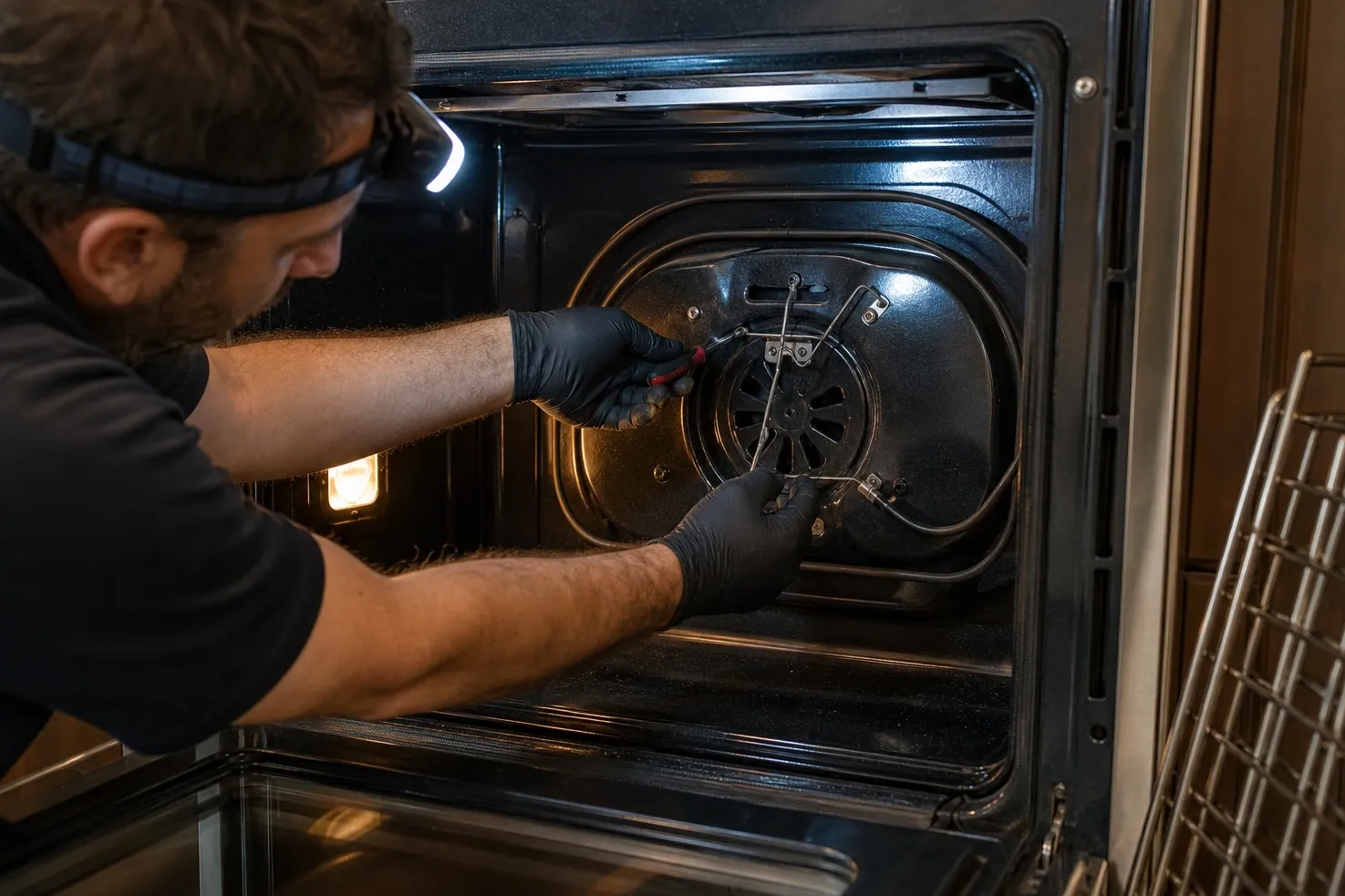
What the symptom usually means
| Symptom | Likely cause | What to do |
|---|---|---|
| No heat at all (gas) | Igniter or gas-valve circuit | Diagnostic on igniter/valve |
| No heat (electric/dual-fuel) | Bake/broil element or relay | Element and control test |
| Uneven baking | Sensor or convection fan | Sensor calibration / fan check |
| F-code shown | Control fault | Read code; diagnostic per model |
Why this happens
The first thing to establish is whether your Wolf is gas or dual-fuel, because the failure points are completely different. On a gas oven, the bake burner relies on a glow-bar igniter that has to draw enough current to open the safety gas valve. As igniters age they weaken; you may hear repeated clicking, smell a little gas before it lights, or get a long delay and weak flame. Eventually the igniter glows but no longer pulls enough current to open the valve, and the oven won’t heat at all even though it looks like it’s trying.
On a dual-fuel or electric oven, heating comes from bake and broil elements rather than a burner. A failed element often shows visible damage — a blister, break or burn mark — and you’ll get no heat from that element while the other may still work, which is why some owners notice the top browns but the bottom won’t bake. A control relay that drives the element can fail with the same symptom.
Uneven baking that still produces heat usually traces to the temperature sensor or the convection fan rather than a dead heating component. If the sensor reads high or low, the control shuts the heat off too early or too late and the oven runs off-temperature; if the convection fan stalls, hot air no longer circulates and you get hot and cold spots. An F-code on the display narrows it further and is worth photographing before the visit.
What NOT to do
- Don’t run the oven on self-clean to “fix” a heating fault.
- Don’t bypass a faulty igniter.
Safe owner checks
- 1 Confirm the range has power and the breaker is on.
- 2 Photograph any F-code on the display.
- 3 Note whether bake, broil or convection is affected.
- 4 Book a diagnostic — have your model number ready.
If these checks don't resolve it, the next step is a diagnostic. We confirm the cause on-site; the $89 service call is waived when you book the repair, and labor carries a 365-day labor warranty.
Models and series we service
We service Wolf gas, dual-fuel and electric ranges and wall ovens, including the L-series and E-series electric wall ovens and the gas and dual-fuel ranges. Older gas ranges lean on the glow-bar igniter and safety valve, while newer L/E-series ovens add electronic controls and sensors that report F-codes — so the diagnostic path and parts differ by configuration and serial.
What to expect from a visit
A no-heat diagnostic identifies fuel type, reads any F-code, and tests the igniter current or element resistance directly rather than guessing. The technician checks the safety valve, sensor and convection fan as needed, confirms the failed part, and quotes before replacing it with a genuine OEM component. Most igniter, element and sensor repairs are completed in a single visit; the oven is run back up to temperature on-site to verify the fix.
Frequently asked questions
Is a Wolf igniter a common repair?
Yes — the glow-bar igniter is one of the most common Wolf gas-oven repairs because it wears with every heating cycle. As it weakens it can’t pull enough current to open the safety valve, so the oven stops heating. It’s a routine, replaceable part with a genuine OEM component, and the $89 service call is waived when you book the repair.
Why does my Wolf oven click but not light?
Repeated clicking with no flame usually means the igniter is glowing but no longer drawing enough current to open the safety gas valve, or the igniter has failed entirely. It can also indicate a valve or control issue. Don’t keep cycling it with gas flowing — book a diagnostic so the technician can test the igniter current and valve directly.
My Wolf oven heats but bakes unevenly — what causes that?
Uneven baking with heat still present usually points to the temperature sensor or the convection fan rather than a dead element. A drifting sensor makes the control cut heat too early or too late, and a stalled convection fan stops hot air from circulating, leaving hot and cold spots. Both are testable; we calibrate or replace the faulty component as needed.
What does an F-code on my Wolf oven mean?
An F-code is the control reporting a specific fault — commonly a temperature sensor, control or relay problem. The exact meaning varies by model and generation, so photograph the code before the visit. We read it against your specific model and serial rather than a generic chart, then confirm the cause on-site before quoting any repair.
Should I run self-clean to fix a heating problem?
No. Self-clean runs the oven extremely hot and can actually push a marginal sensor, control or relay over the edge, turning a small heating fault into a larger one. If the oven is already misbehaving, skip self-clean and book a diagnostic. Running it won’t reset or repair a failing igniter, element or sensor.
Do you repair both gas and dual-fuel Wolf ovens?
Yes. We service Wolf gas, dual-fuel and electric ranges and wall ovens. The failure points differ — gas ovens rely on the igniter and safety valve, while dual-fuel and electric models use bake and broil elements and relays — so we identify your configuration first and bring the right genuine OEM parts. The $89 service call is waived with the repair.