Sub-Zero 500 Series repair: the mechanical built-in, decoded
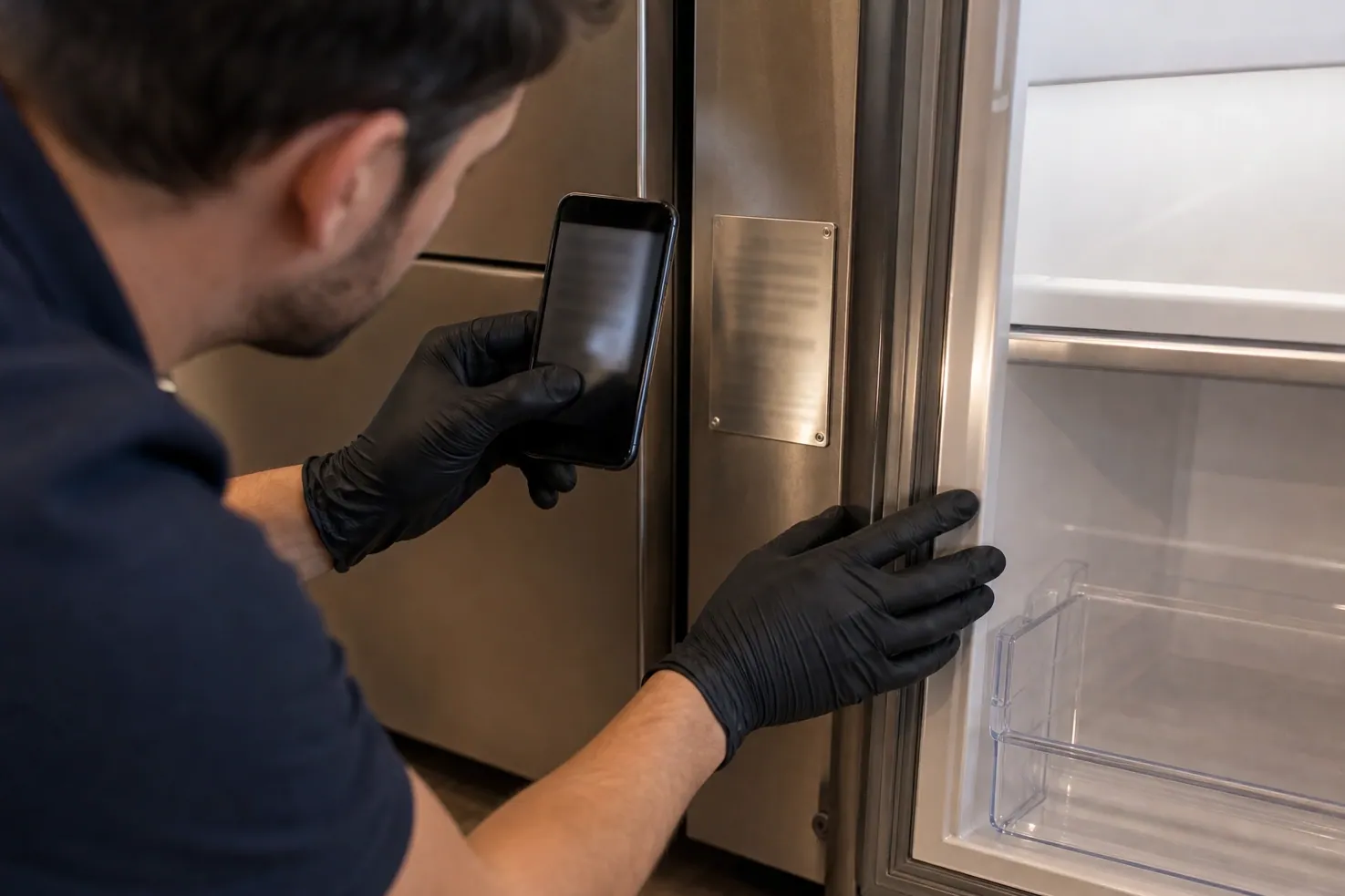
The Sub-Zero 500 Series is the brand's mechanical-era built-in, produced from 1987 through the late 1990s (a few 561 variants ran to 2003). It is controlled by a simple numbered dial — no circuit board, no error codes — and the multi-compartment models pair two independent sealed systems behind one cabinet.
That last point is why owners across the Peninsula and South Bay keep these units alive long past the average appliance's lifespan. When something fails on a 500, it is almost always one serviceable part inside a cabinet that was overbuilt to outlive it. Knowing which model you have, and reading the rating plate correctly, is where every honest repair decision starts.
Knowing your 500 model on sight
Every 500 Series number tells you the layout before a technician opens a single panel. The two single-compartment units — the 501R all-refrigerator and the 501F all-freezer — run one compressor each and are often installed side by side as a matched pair. Everything else in the line is a combination unit: a fridge compartment on top and a freezer below, in an over-and-under arrangement. (A common myth has these as side-by-side units; the tall side-by-side and column formats did not arrive until the 700 Series.)
| Model | Configuration | Sealed systems |
|---|---|---|
| 501R | All-refrigerator (single compartment) | One compressor |
| 501F | All-freezer (single compartment) | One compressor |
| 511 / 532 / 542 | Over-and-under combination | Dual compressor / dual evaporator |
| 550 / 561 / 590 | Over-and-under combination | Dual compressor / dual evaporator |
The 532 is the model that popularised the dual-system design, and most of the combination units we service in older Los Altos and Atherton kitchens are built on the same idea. If you are unsure which number is yours, our model-number guide shows where the rating plate hides behind the upper grille.
A dial, not a diagnostic screen
The defining trait of the 500 Series is how little it tells you. Temperature is set with a mechanical thermostat dial on a roughly 1-to-10 scale, with 4 to 6 being normal for most homes. There is no control board, no thermistor network, and crucially no error codes — electronics did not enter the Sub-Zero built-in line until the 600 Series. (If your unit flashes a code or shows a "VACUUM CONDENSER" message, you have a 600, and our companion 600 Series error-code guide covers it.)
That simplicity cuts both ways. There is no software to corrupt and no proprietary diagnostic mode to enter, which is part of why these units last. But it also means the machine cannot point to its own fault — diagnosis is done the old way, with gauges, a multimeter, and an understanding of how a dual sealed system behaves. A warm fresh-food side with a perfectly frozen freezer on a combination model is a clue in itself: it tells us one of the two systems is healthy and the other is not.
What actually fails — and why these are worth fixing
After three decades, the failures follow a predictable order. Door gaskets are the number-one issue: hardened or torn rubber lets warm air in, which shows as condensation, frost, or a unit that simply never stops running. After that come sealed-system refrigerant leaks (frequently at the evaporator coil), compressor wear, defrost faults at the drain, heater or thermostat, and the condenser and evaporator fan motors. Ice-maker and water-line problems round out the list.
The dual-system architecture is a genuine advantage during repair. On a combination model the fresh-food and freezer compartments each have their own compressor and evaporator, so one side can fail completely while the other keeps working — and we can often restore the failed half without disturbing the good one. Add the fact that the steel cabinet, foam insulation and stainless frame routinely outlast the sealed system, and that Sub-Zero stocks OEM parts for fifteen to twenty-plus years after a model is discontinued, and the math usually favours repair. Where it does not — typically a tired compressor in an otherwise dated unit — we say so plainly; our repair-or-replace guide walks through that honest call.
R-12 or R-134a? Read the plate, not the model number
Here is the detail that trips up even some technicians: a 500 Series unit can be charged with either R-12 or R-134a, and you cannot tell which from the model number. Sub-Zero transitioned the line from R-12 to R-134a in 1994, so the same model built in 1992 and 1995 may carry different refrigerants. There is no published serial cutoff — the only reliable answer is printed on the rating plate behind the grille.
This matters because the two are not interchangeable in a quick top-up. An R-12 system uses mineral oil; R-134a needs ester (POE) oil, and mixing them or recharging with the wrong gas does real harm. Any refrigerant work is professional-only by law: the charge must be recovered rather than vented, and the gas may only be handled by an EPA Section 608 certified technician. We diagnose the sealed system, confirm the refrigerant from the plate, and explain the path honestly — the trade-offs between a reclaimed-R-12 recharge and a full R-134a conversion are covered in our refrigerant conversion guide and on our sealed-system page.
Questions & answers
Does the Sub-Zero 500 Series have error codes?
No. The 500 Series is entirely mechanical — temperature is set by a numbered dial and there is no control board or diagnostic display. Error codes and on-screen alerts first appeared on the 600 Series. If your unit shows a code, it is a 600, not a 500.
Is my 500 Series a side-by-side?
Almost certainly not. The combination models (511, 532, 542, 550, 561, 590) are over-and-under, with the refrigerator on top and the freezer below. The 501R and 501F are single-compartment units often installed as a matched pair. The tall side-by-side and column formats came with the later 700 Series.
How do I know if my 500 uses R-12 or R-134a?
Read the rating plate behind the upper grille — it lists the refrigerant. Sub-Zero switched the line from R-12 to R-134a in 1994, and you cannot tell which a unit uses from the model number alone. There is no published serial cutoff, so the plate is the only reliable source.
More Bay Area repair guides
- Owner decision · 4 minSub-Zero Alternatives: How Thermador, Miele and Liebherr Compare in a Bay Area KitchenSub-Zero vs Thermador, Miele, Liebherr, Monogram, Dacor and True: a repair bench's read on every real Sub-Zero alternative, and when keeping yours wins.Read the guide →
- Undercounter & Drawer Units · 5 minSub-Zero Undercounter & Drawer Units: An Owner's Repair GuideHow Sub-Zero undercounter, beverage, and drawer units fail in island and bar installs, what repairs cost in the Bay Area, and when to repair or replace.Read the guide →
- Wolf E Series Case Story · 5 minThe Wolf E Series Oven Everyone Blamed on the BoardA Noe Valley Wolf E series wall oven died on bake while the broiler kept working. Everyone blamed the relay board. The meter blamed a $438 bake element.Read the guide →